




BEIRUT — Near-simultaneous bombings claimed by the Islamic State group struck in and around strongholds of the Syrian government and Kurdish troops Monday, killing at least 48 people in a wave of attacks that came a day after the militants lost a vital link to the outside world along the Syrian-Turkish border.
The ISIS-run Aamaq news agency said the attacks included six suicide bombings and one remotely detonated blast. Most targeted security forces.
The Britain-based Observatory, which maintains a network of contacts in Syria, put the overall death toll at 53, although Syrian state TV said 48 were killed. Conflicting casualty figures are common in the 5-year-old Syria civil war.
Jennifer Cafarella, a Syria expert with the Washington-based Institute for the Study of War, said it was too soon to say if the attacks by the IS group were a reaction to its recent defeats along the border.
But she cautioned that setbacks for ISIS can lead to “a dangerous new phase” by the group, which sometimes resorts to “infiltration and spectacular attacks that exploit and widen rifts” between populations, groups and security forces in both western and northern Syria,
Turkey’s recent intervention in the north has exposed major rifts and encouraged anti-Kurdish activity, Cafarella said in emails to The Associated Press. She said it was likely that as ISIS militants are pushed out of territory, they will increasingly target government and Kurdish areas.
“So it’s a dangerous possibility that we’re witnessing ISIS gear up for a campaign to expand westward into either or both regime and opposition territory as it loses to the anti-ISIS coalition,” she said, using an acronym for the militant group.
The territorial losses at the border were the biggest blow to the militant group that also has suffered a series of recent battlefield setbacks in Syria and Iraq. Syrian rebels, backed by Turkish warplanes and tanks, continued to push ISIS fighters out of the border strip Monday, securing their hold on an area seized a day earlier.
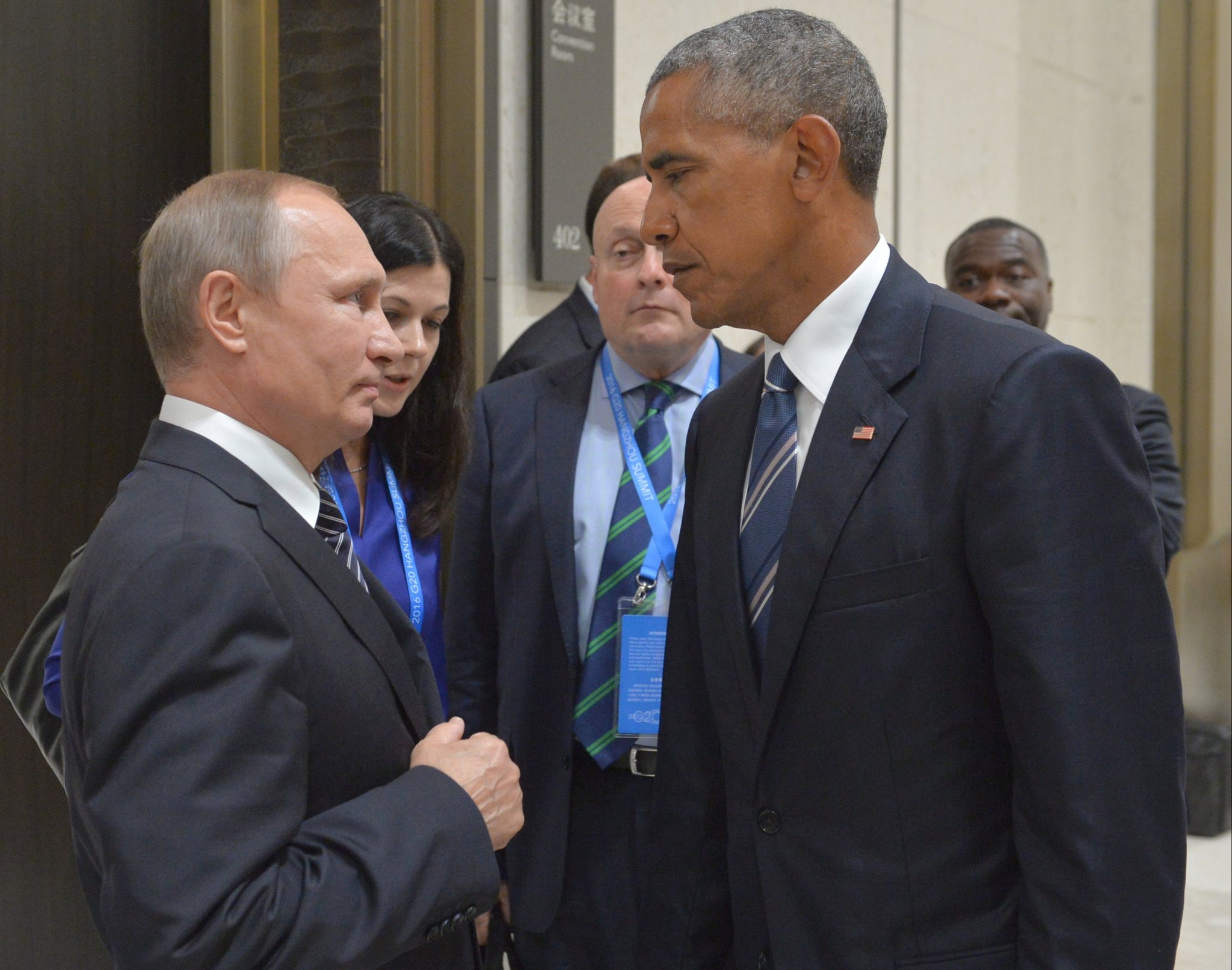
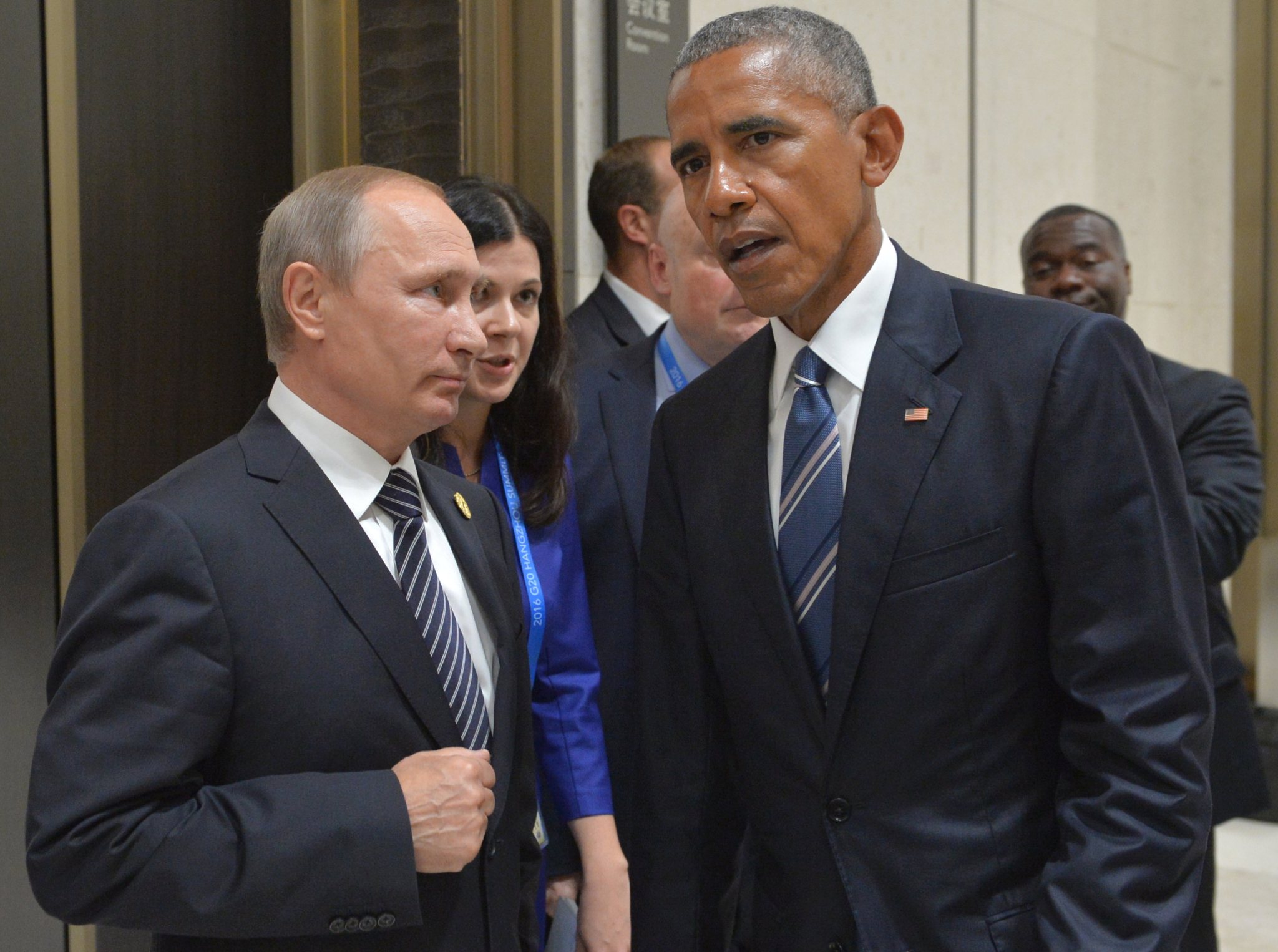
In Hangzhou, China, meanwhile, President Barack Obama said the U.S. and Russia have not given up on negotiations to halt the bloodshed in Syria, but acknowledged that “gaps of trust” exist between the rival powers.
Significant sticking points remain in negotiations over creating a U.S.-Russian military partnership focusing firepower on “common enemies” in Syria, Obama said. He acknowledged that a meeting Monday with Russian President Vladimir Putin did not yield a breakthrough.
A deal would depend on Moscow using its influence with Syrian President Bashar Assad to persuade him to ground planes and stop the assault on opposition forces.
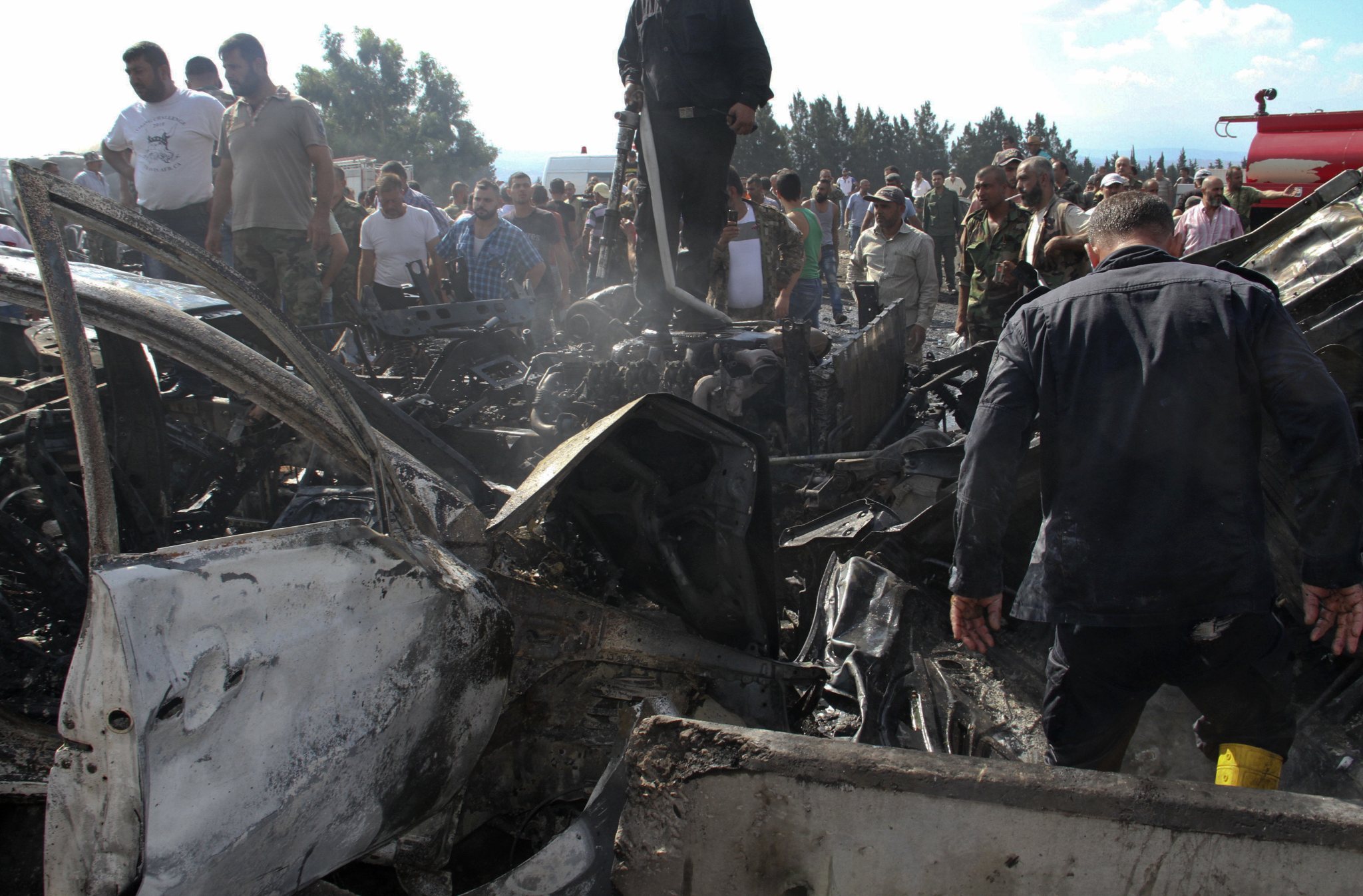
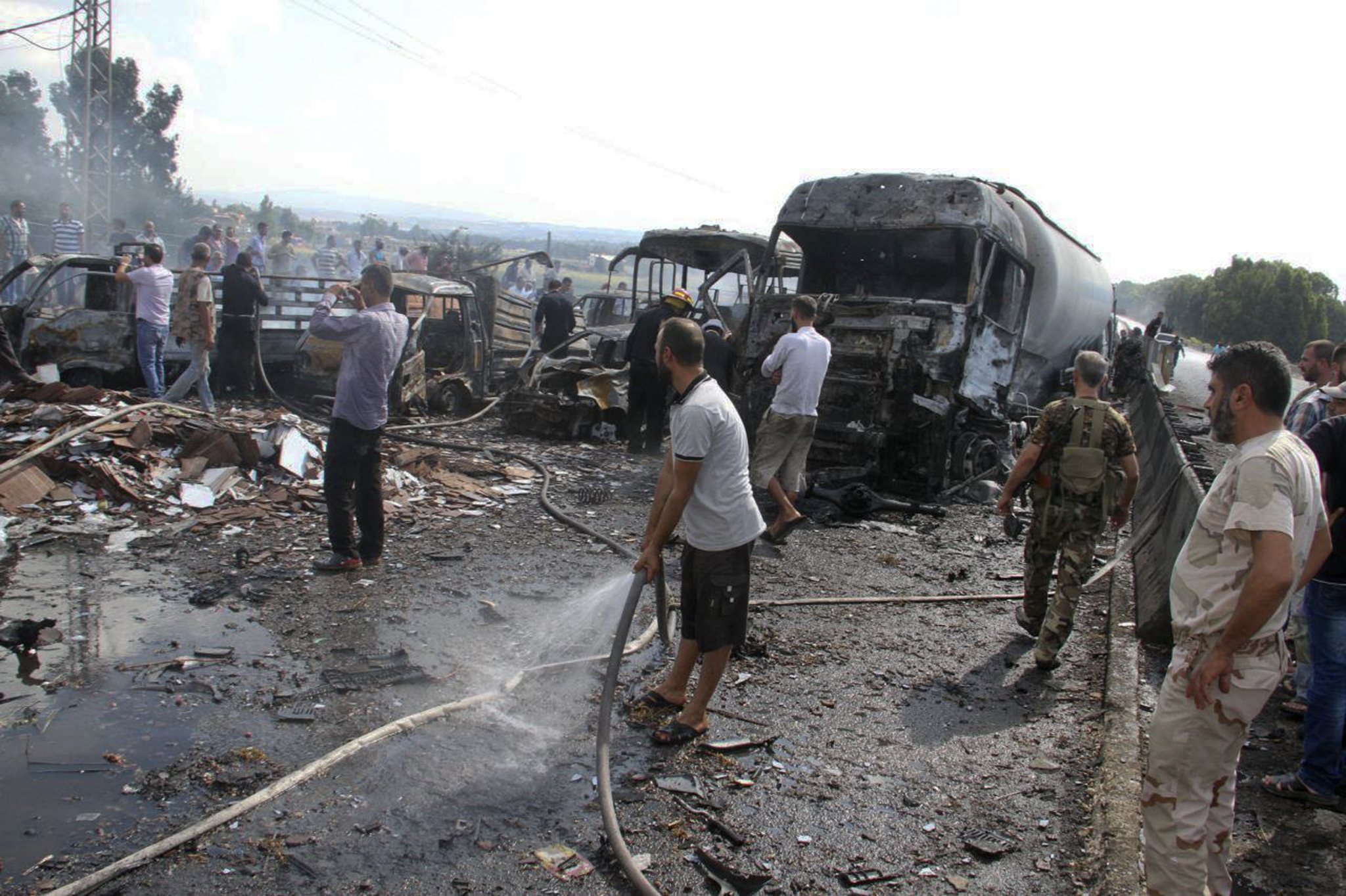
Monday’s bombings came in rapid succession during the morning rush hour, targeting the central city of Homs; a highly guarded Damascus suburb; the government stronghold of Tartus, where Russia has a major naval base; and Kurdish areas in northeastern Syria.
State TV showed massive damage at the Arzoneh bridge just outside Tartus along the international coastal highway. The report said the Tartus-Homs highway was closed briefly.
Dozens of burned and mangled cars sat in pools of water mixed with blood after the blaze was extinguished.
“My car caught fire and army soldiers pulled us out of the car,” a survivor told state TV from al-Bassel Hospital.

