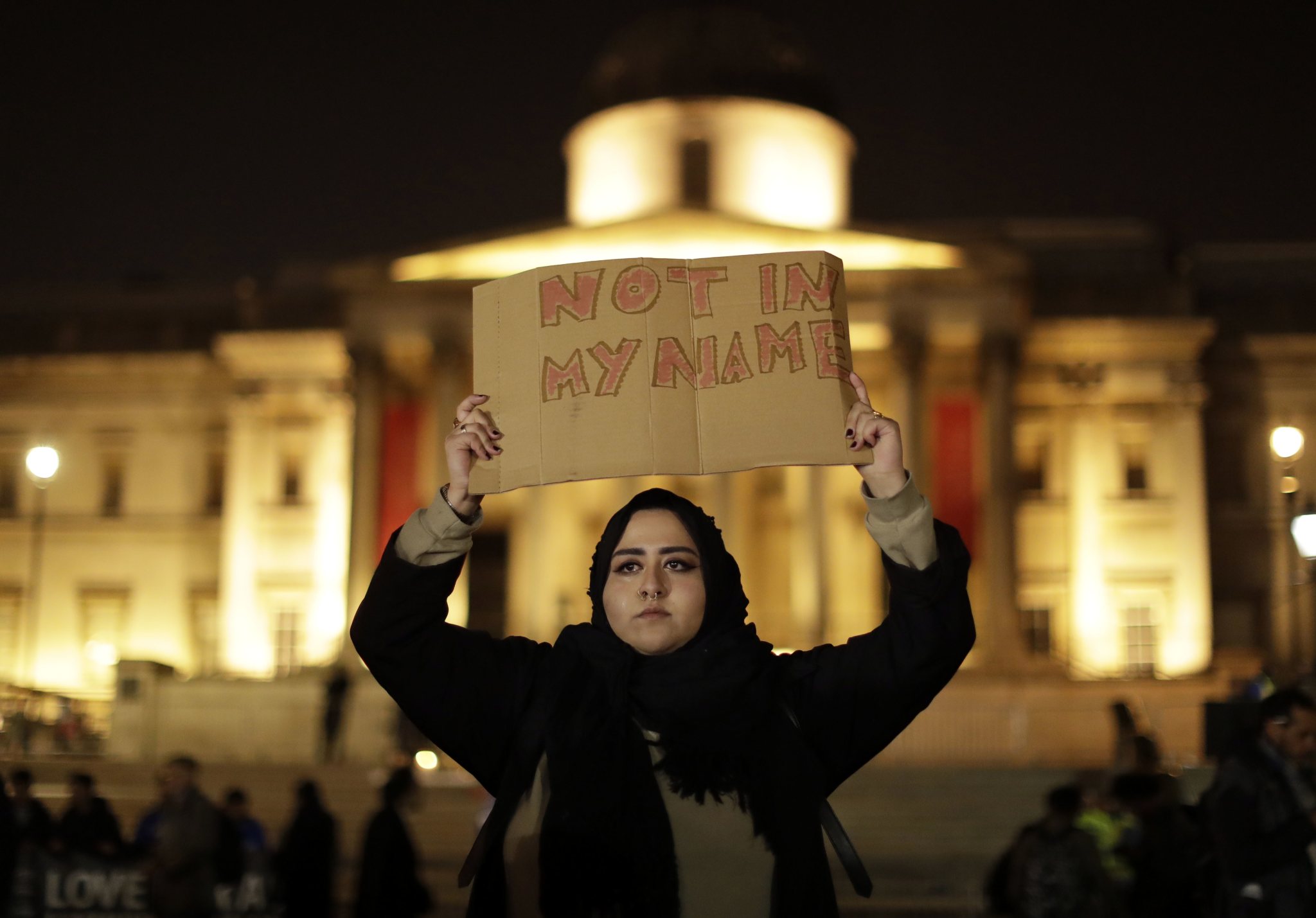
A woman holds up a sign at a vigil for the victims of Wednesday’s attack, at Trafalgar Square in London, Thursday, March 23, 2017. The Islamic State group has claimed responsibility for an attack by a man who plowed an SUV into pedestrians and then stabbed a police officer to death on the grounds of Britain’s Parliament. Mayor Sadiq Khan called for Londoners to attend a candlelit vigil at Trafalgar Square on Thursday evening in solidarity with the victims and their families and to show that London remains united. (AP Photo/Matt Dunham)
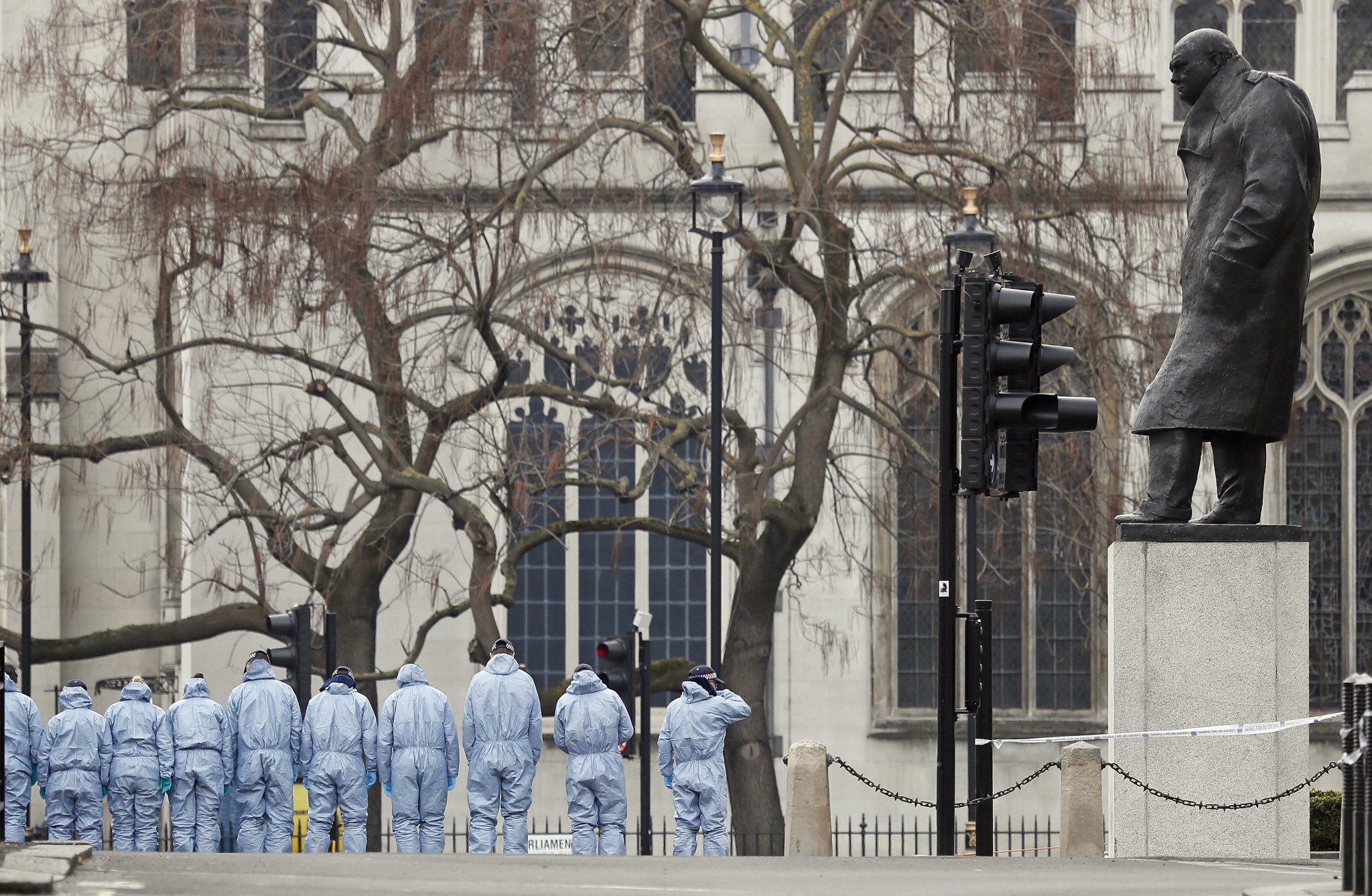
Police forensic officers work in Parliament Square overseen by the statue of Winston Churchill outside the Houses of Parliament in London, Thursday March 23, 2017. On Wednesday a knife-wielding man went on a deadly rampage, first driving a car into pedestrians then stabbing a police officer to death before being fatally shot by police within Parliament’s grounds in London. (AP Photo/Kirsty Wigglesworth)
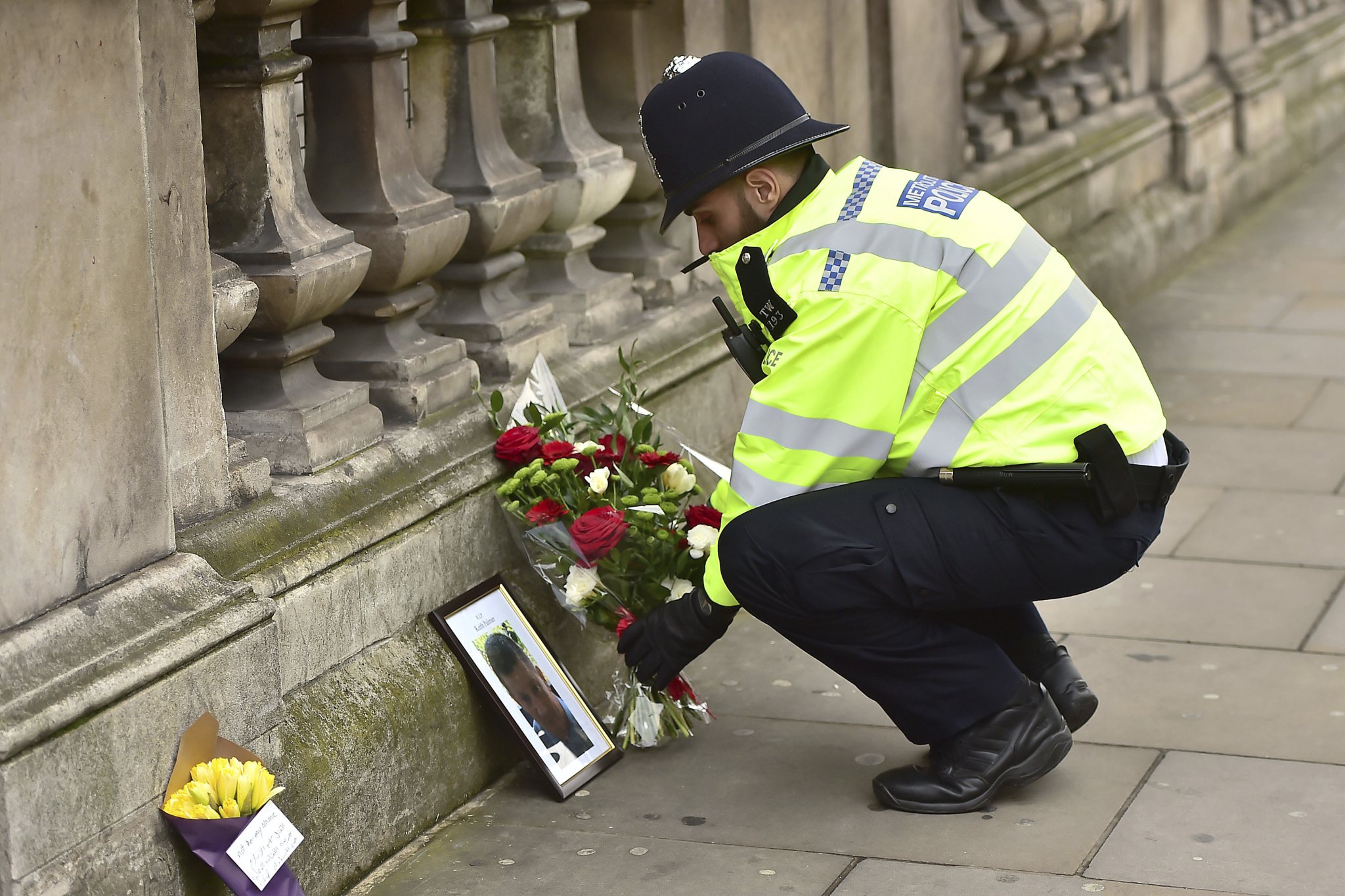
A police officer places flowers and a photo of fellow officer Keith Palmer, who was killed in Wednesday’s attack near the Houses of Parliament in London. (Associated Press)
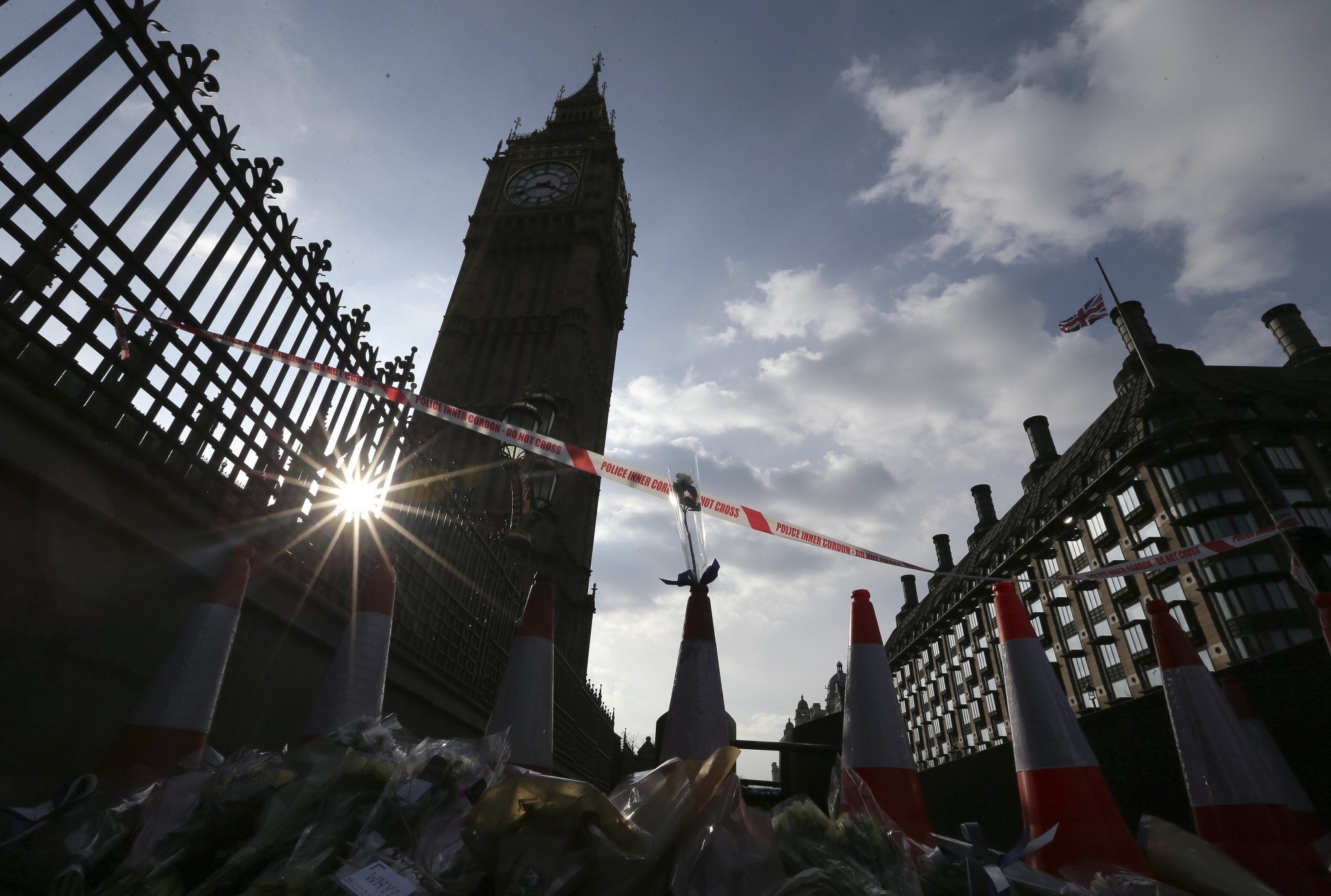
Floral tributes to the victims of Wednesday’s attack, is placed near the Houses of Parliament in London, Thursday March 23, 2017. On Wednesday a knife-wielding man went on a deadly rampage, first driving a car into pedestrians then stabbing a police officer to death before being fatally shot by police within Parliament’s grounds in London. (AP Photo/Tim Ireland)
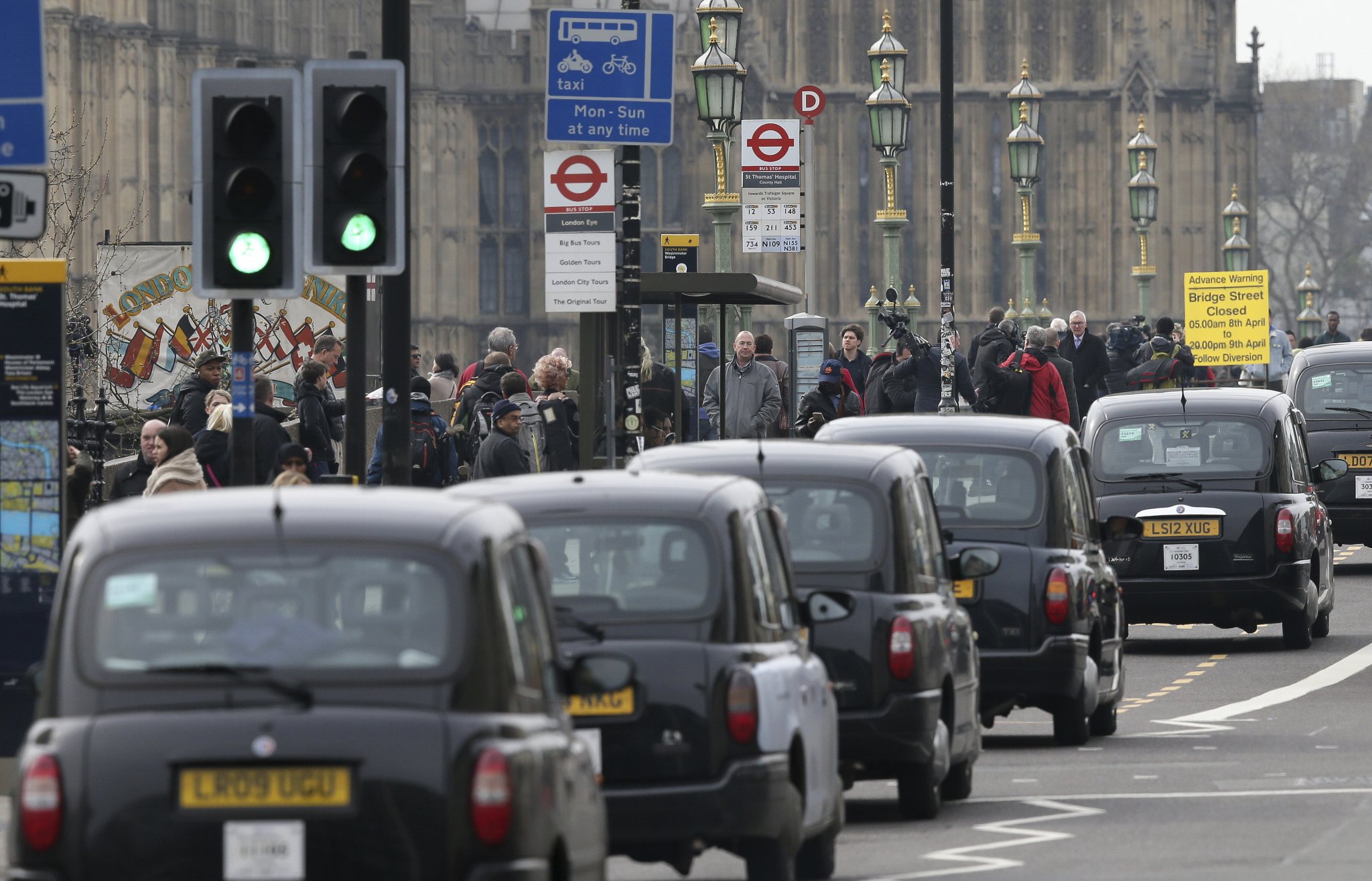
Black cabs cross Westminster Bridge after it was reopened to the public Thursday, March 23, 2017, following an attack on Wednesday when a man drove a car into pedestrians then stabbed a police officer to death before being fatally shot by police within Parliament’s grounds. The IS-linked Aamaq news agency said Thursday that the person who carried out the “attack in front of the British parliament in London was a soldier of the Islamic State.” (AP Photo/Tim Ireland)
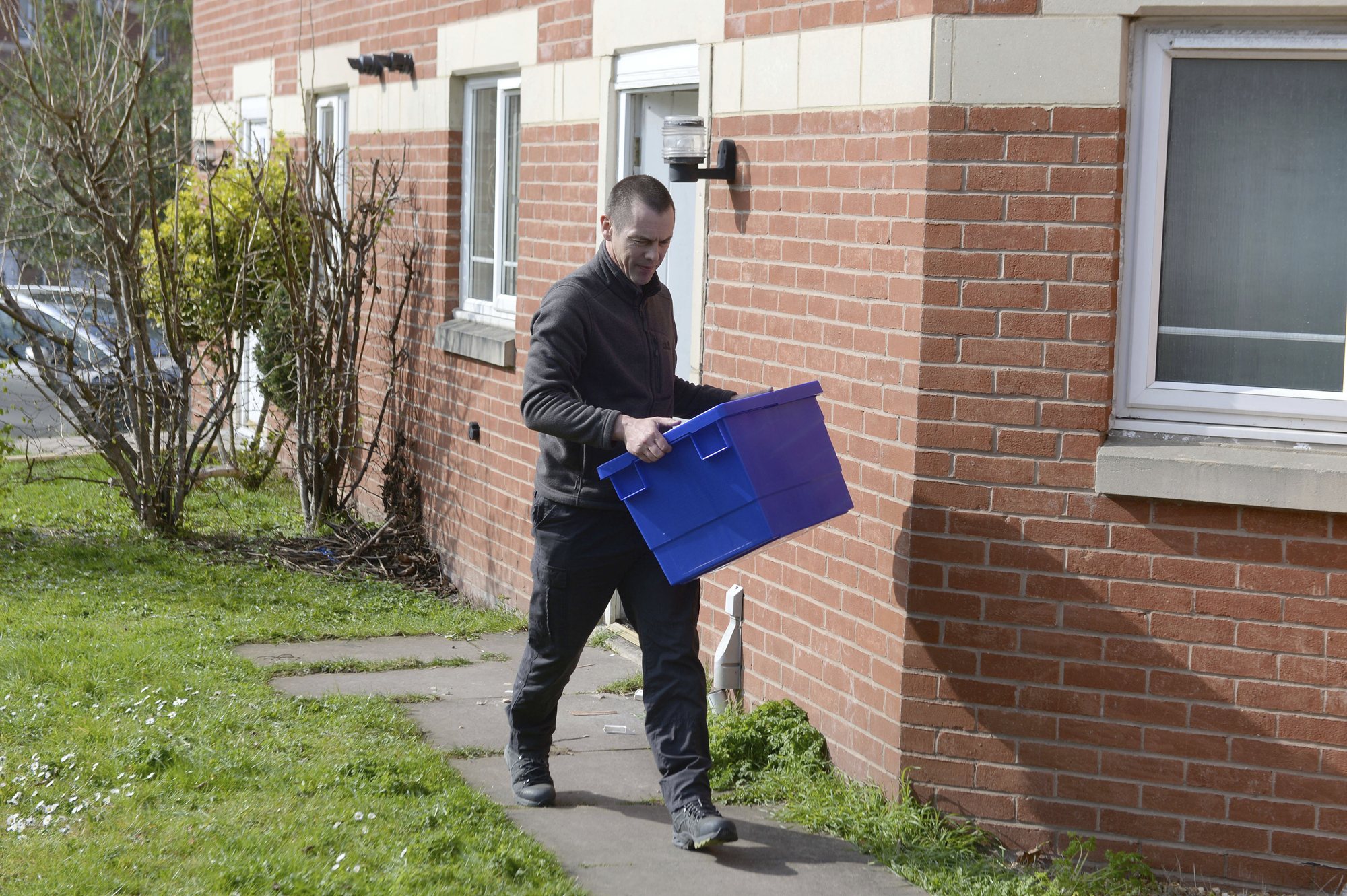
Police activity at an address in Winson Green, Birmingham, England, Thursday, March 23, 2017. Seven people were arrested and six addresses raided in London, Birmingham and elsewhere in connection with the terror attack at the Houses of Parliament. (Joe Giddens/PA via AP)
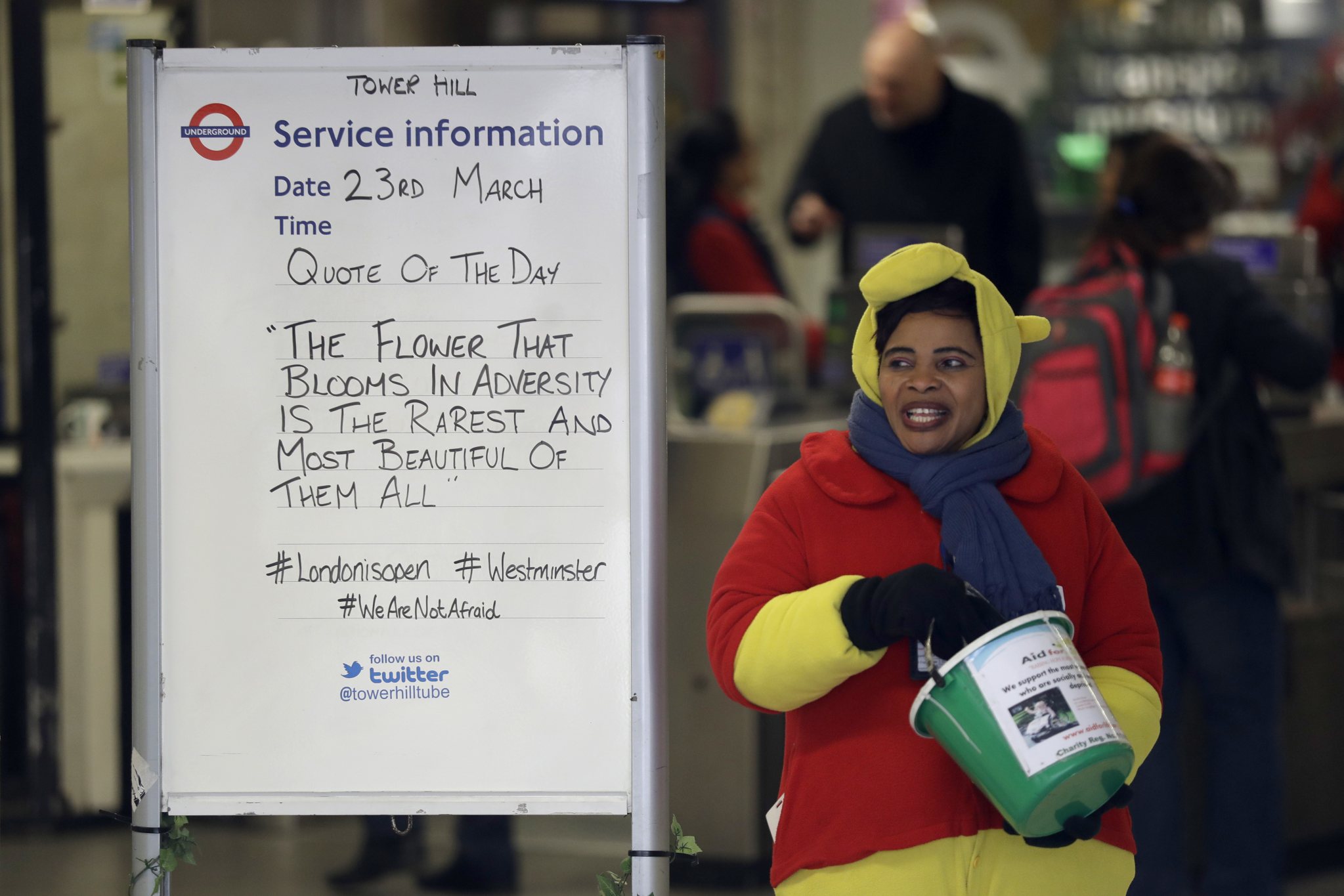
A woman collecting money for charity stands next to a quote written on an information board at Tower Hill underground train station, written in defiance of the previous day’s attack in London, Thursday, March 23, 2017. On Wednesday a man went on a deadly rampage, first driving a car into pedestrians then stabbing a police officer to death before being fatally shot by police within Parliament’s grounds in London. (AP Photo/Matt Dunham)
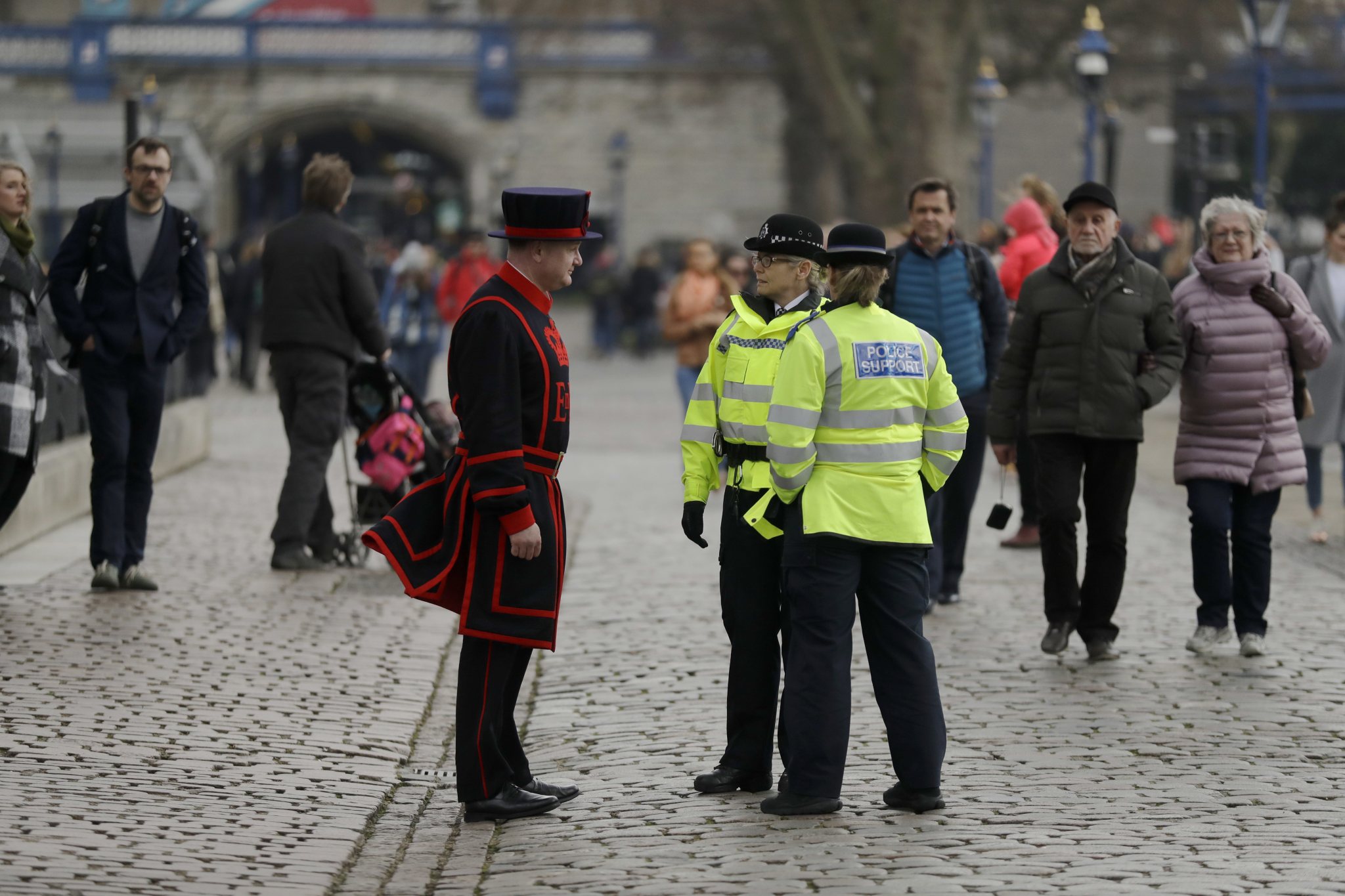
A police officer and support officer on patrol speak to a Yeoman Warder of the Tower of London, known as a Beefeater, at the Tower of London, a popular tourist attraction in London, Thursday, March 23, 2017. On Wednesday a man went on a deadly rampage, first driving a car into pedestrians then stabbing a police officer to death before being fatally shot by police within Parliament’s grounds in London. (AP Photo/Matt Dunham)
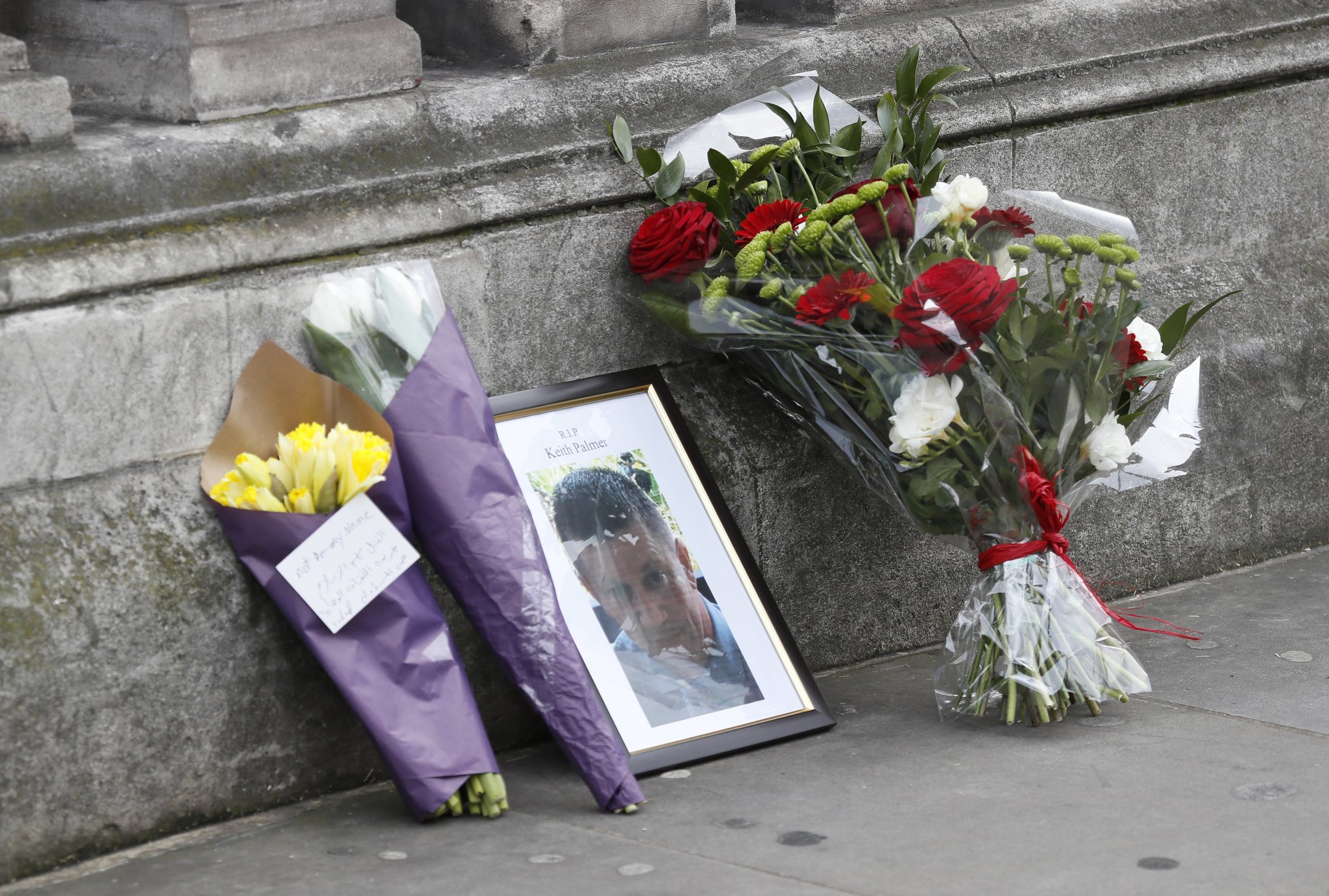
Flowers and a photo of killed police officer Keith Palmer on Whitehall near the Houses of Parliament in London, Thursday March 23, 2017. On Wednesday a knife-wielding man went on a deadly rampage, first driving a car into pedestrians then stabbing a police officer to death before being fatally shot by police within Parliament’s grounds in London. (AP Photo/Kirsty Wigglesworth)
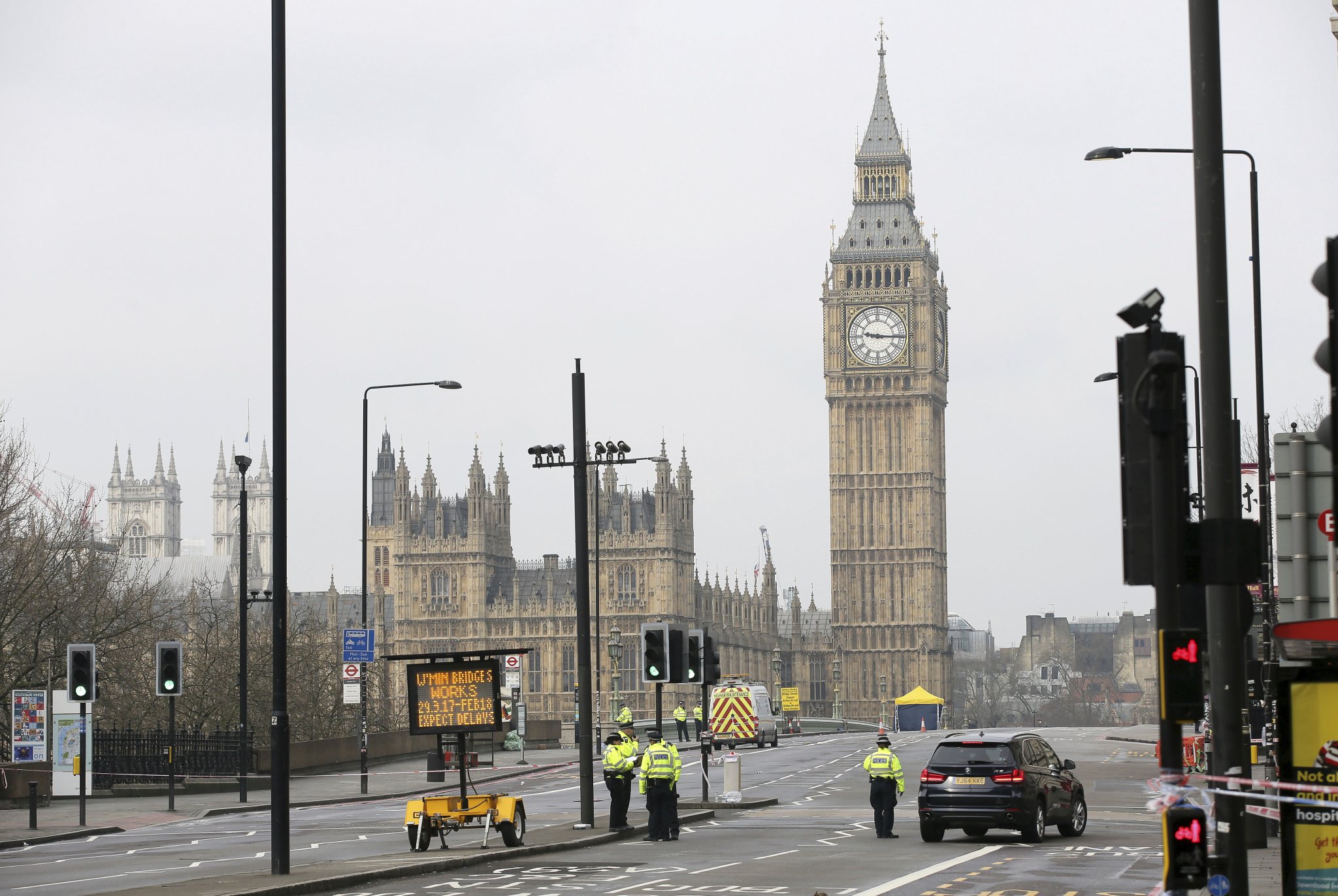
Police work at Westminster Bridge with the Houses of Parliament in background, in London, Thursday March 23, 2017. On Wednesday a knife-wielding man went on a deadly rampage, first driving a car into pedestrians on Westminster Bridge then stabbing a police officer to death before being fatally shot by police within Parliament’s grounds in London. (AP Photo/Tim Ireland)
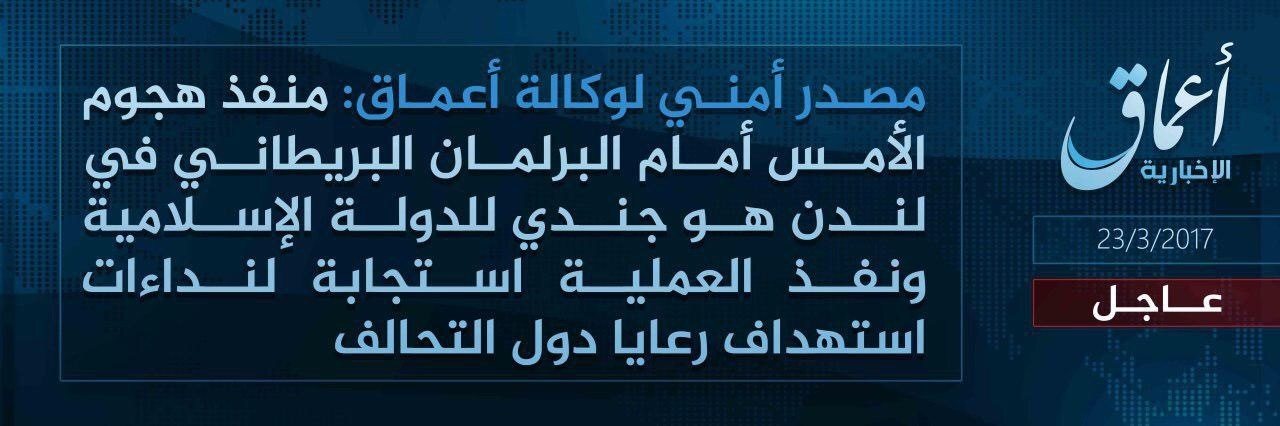
Thus graphic released on Thursday, March 23, 2017 by the Islamic State-linked Aamaq news agency shows a claim of responsibility for an attack on Britain’s Parliament. Arabic reads: “attack in front of the British parliament in London is a soldier of the Islamic State and he carried out the operation in response to calls for targeting citizens of the coalition.” (Aamaq news agency via AP)
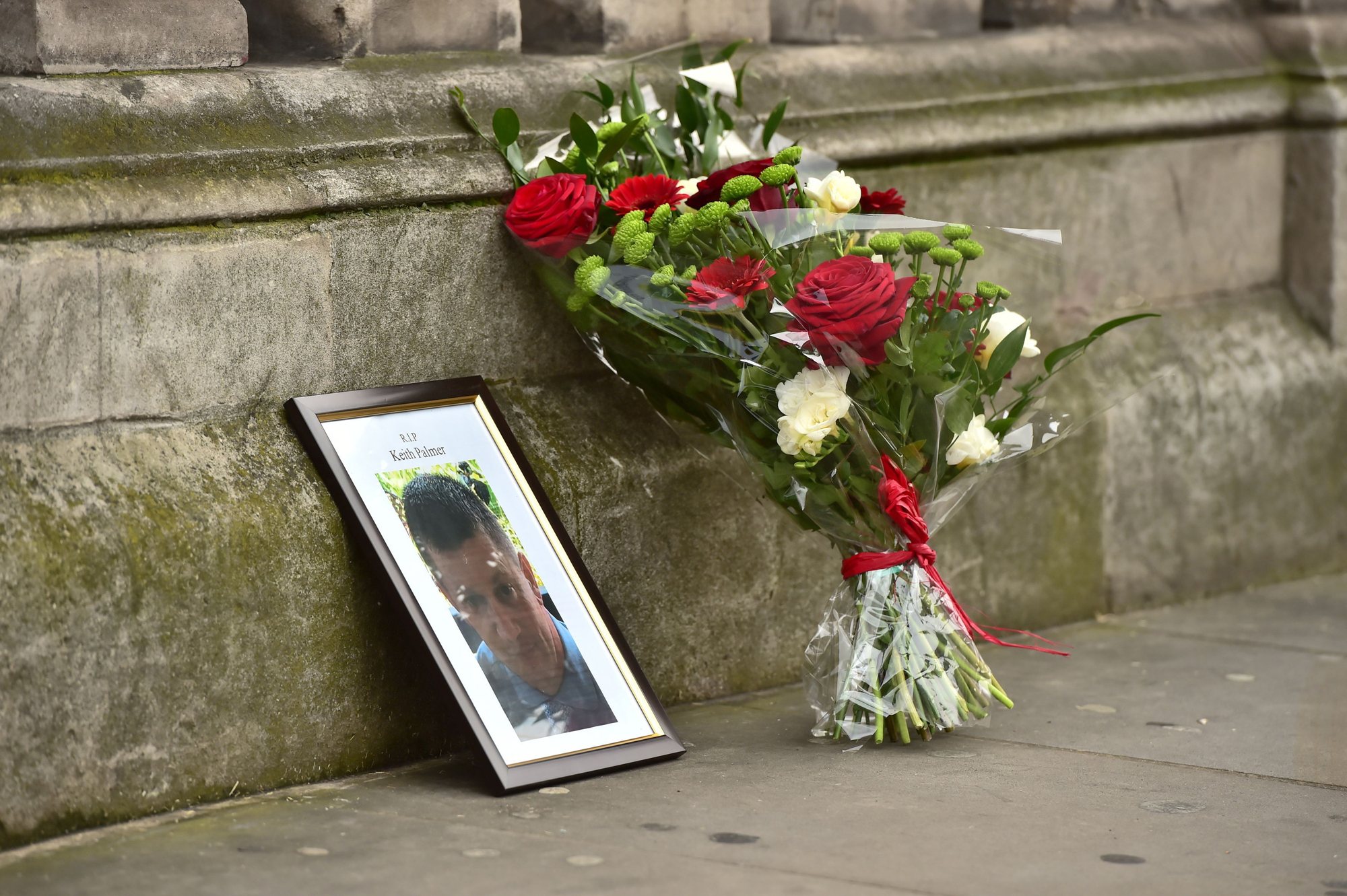
Flowers and a photo of killed police officer Keith Palmer on Whitehall near the Houses of Parliament in London, Thursday March 23, 2017. On Wednesday a knife-wielding man went on a deadly rampage, first driving a car into pedestrians then stabbing a police officer to death before being fatally shot by police within Parliament’s grounds in London. (Dominic Lipinski/PA via AP)
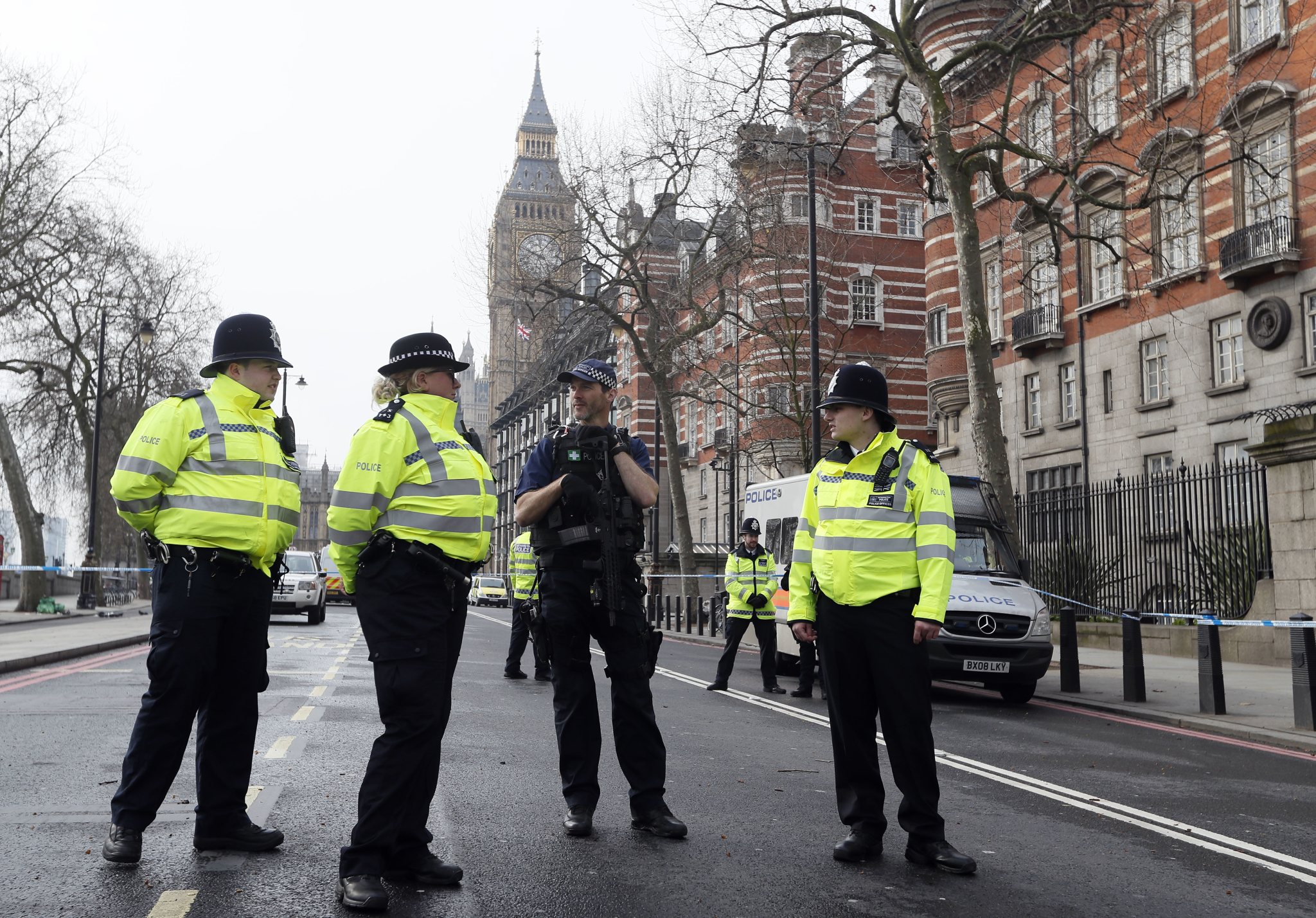
Police officers stand guard on a road leading to the Houses of Parliament in London, Thursday March 23, 2017 on her way to the House of Parliament. On Wednesday a man went on a deadly rampage, first driving a car into pedestrians then stabbing a police officer to death before being fatally shot by police within Parliament’s grounds in London. (AP Photo/Kirsty Wigglesworth)
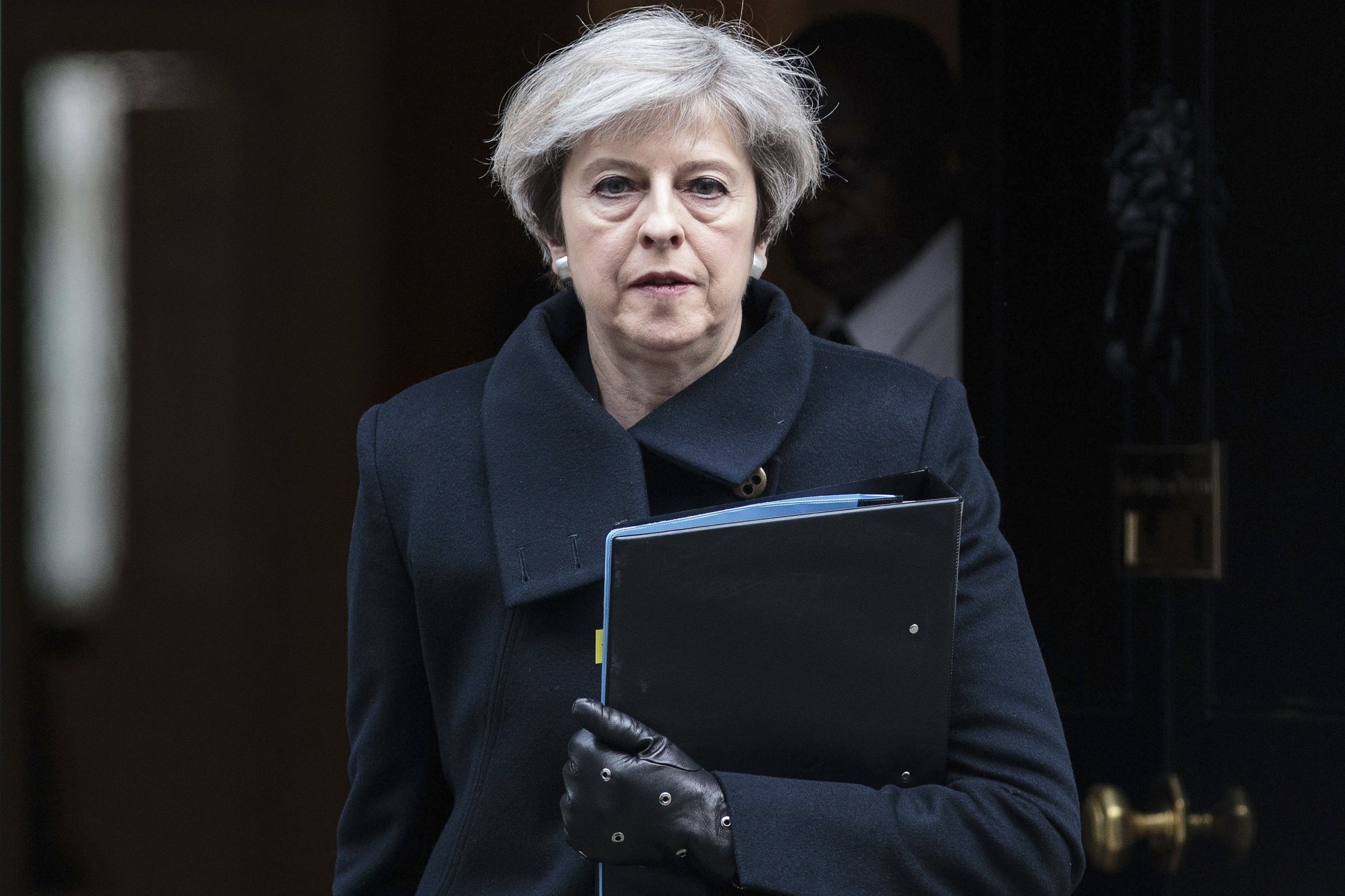
Britain’s Prime Minister Theresa May leaves 10 Downing Street in London on her way to parliament, Thursday March 23, 2017, following the attack in London Wednesday. On Wednesday a man went on a deadly rampage, first drove a car into pedestrians then stabbed a police officer to death before being fatally shot by police within Parliament’s grounds in London. (Jack Taylor/Pool via AP)
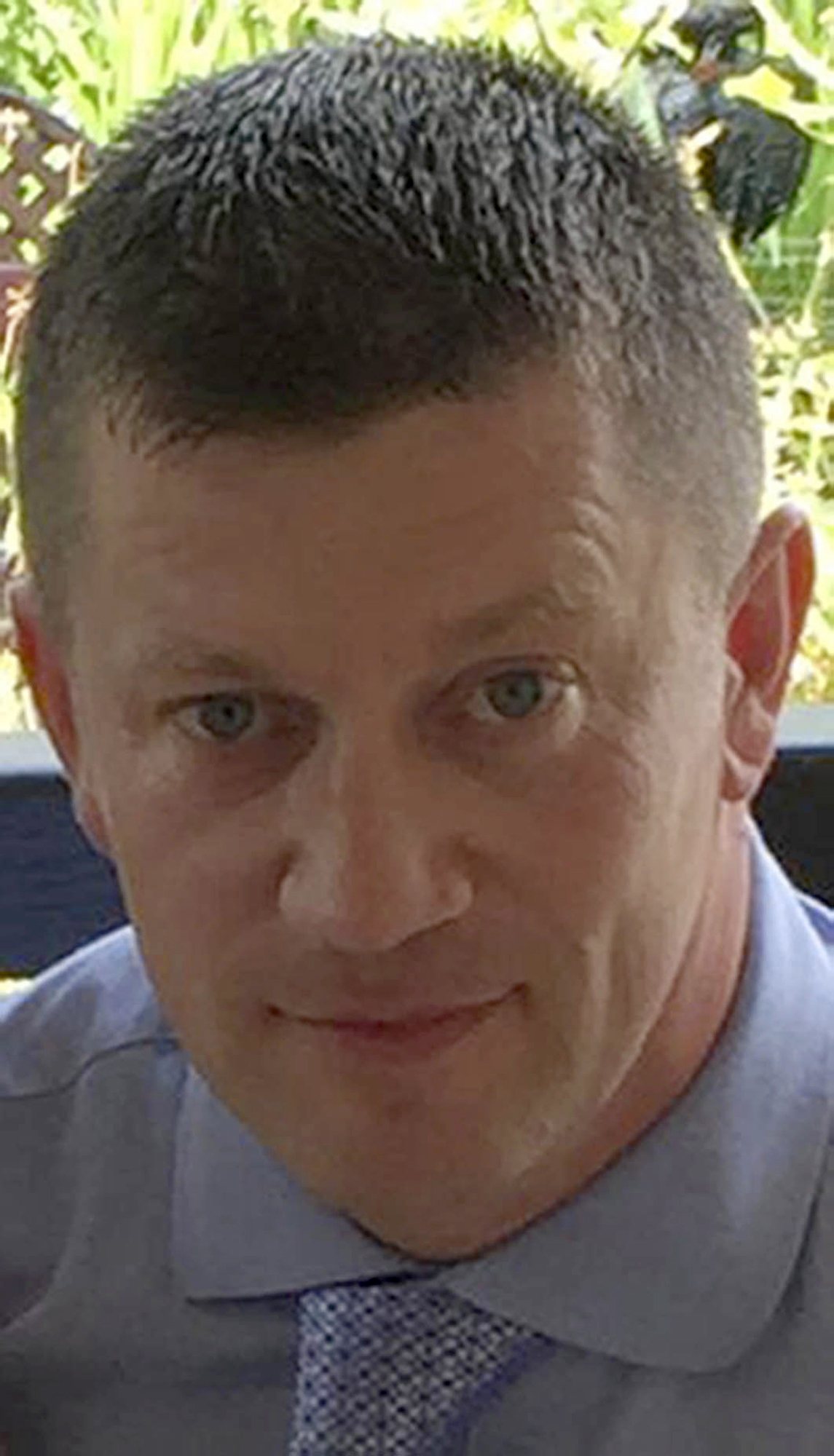
Undated handout photo released by Metropolitan Police on Wednesday, March 22, 2017 of police officer Keith Palmer who was killed during the attack on the Houses of Parliament in London. A knife-wielding man went on a deadly rampage in the heart of Britain’s seat of power Wednesday, plowing a car into pedestrians on London’s Westminster Bridge before stabbing a police officer to death inside the gates of Parliament. Five people were killed, including the assailant, and 40 others were injured in what Prime Minister Theresa May condemned as a “sick and depraved terrorist attack.” (Metropolitan Police via AP)
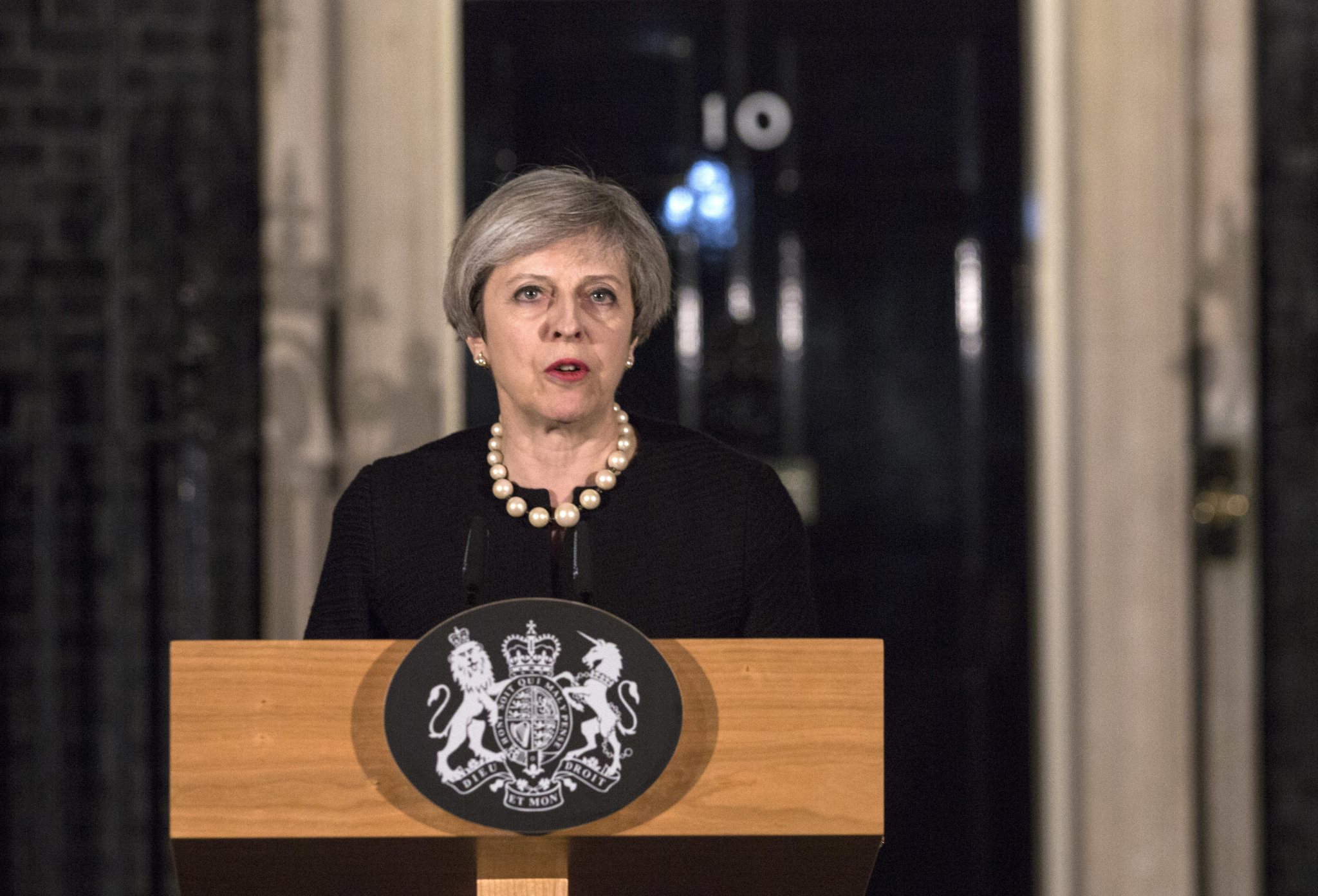
Britain’s Prime Minister Theresa May gives a media statement outside 10 Downing street in London, Wednesday March 22, 2017, following a terror attack in the Westminster area of London earlier Wednesday. A knife-wielding man went on a deadly rampage, Wednesday, plowing a car into pedestrians on London’s Westminster Bridge before stabbing an armed police officer to death inside the gates of Parliament. Four people were killed, including the attacker, and about 20 others were injured in what authorities called a terrorist incident. (Richard Pohle/Pool via AP Photo)
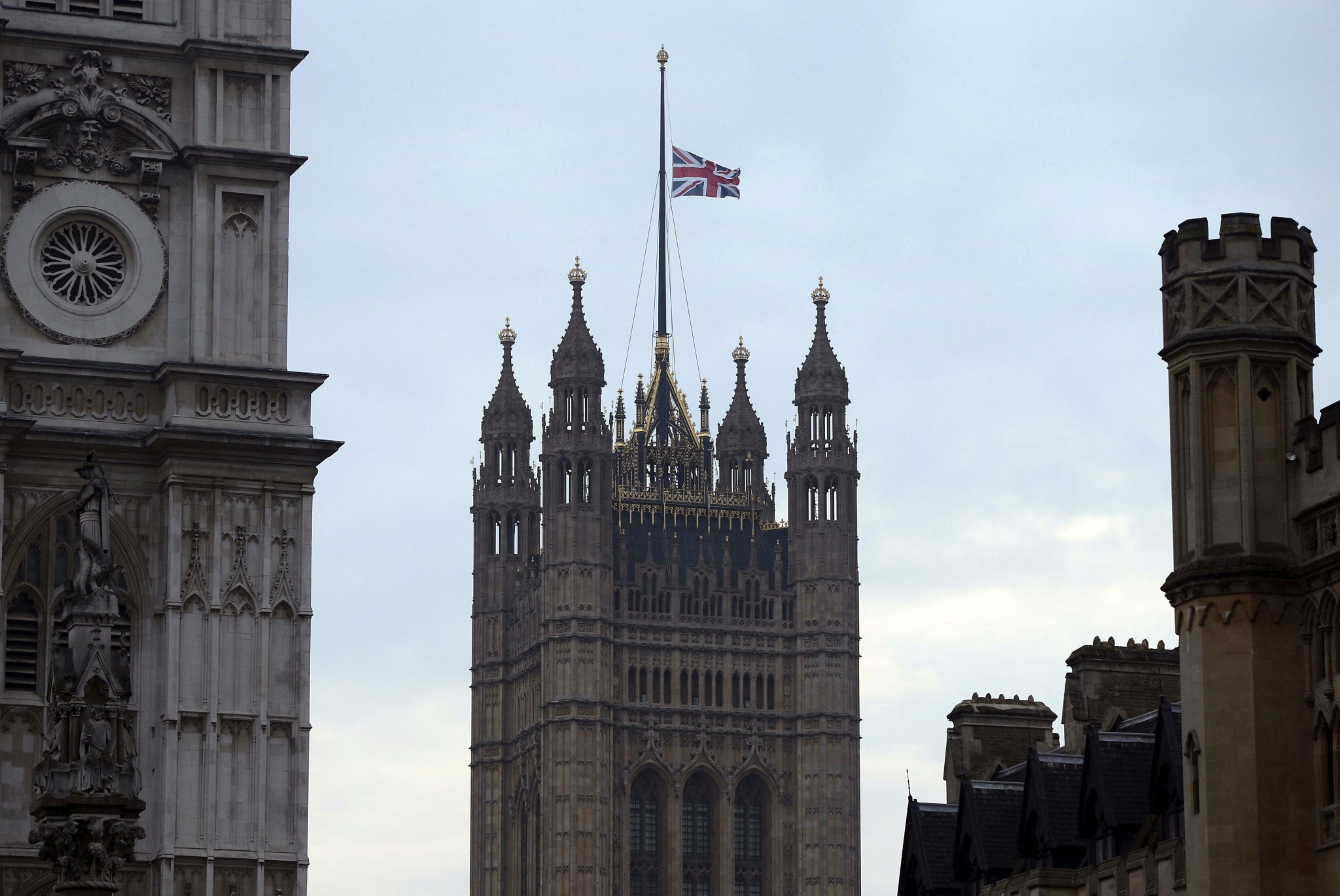
The flag above the Houses of Parliament flies at half mast, the day after a terrorist attack in London, Britain, Thursday March 23, 2017. A knife-wielding man went on a deadly rampage in the heart of Britain’s seat of power Wednesday, plowing a car into pedestrians on London’s Westminster Bridge before stabbing a police officer to death inside the gates of Parliament. Five people were killed, including the assailant. (Jonathan Brady/PA via AP)
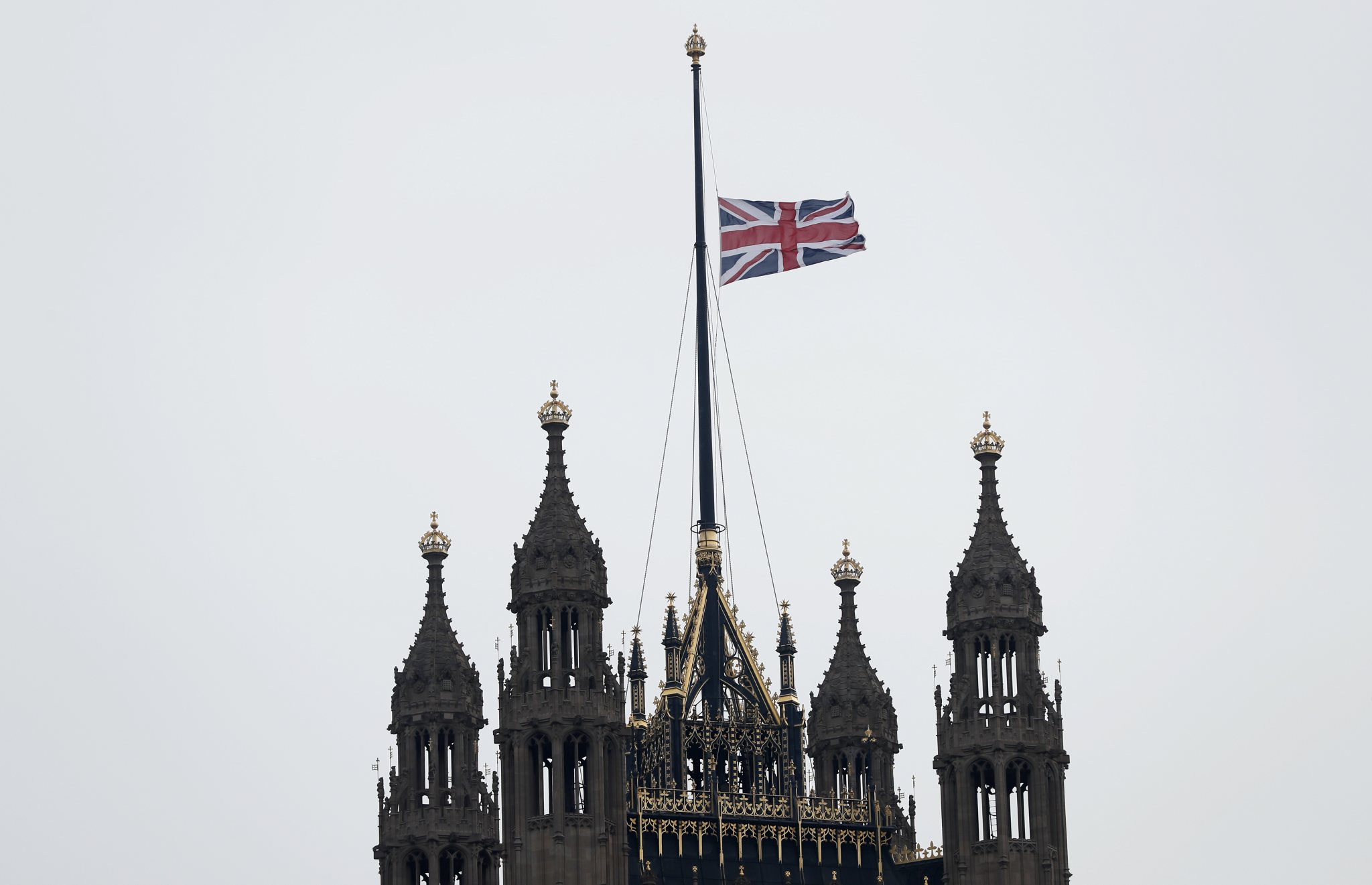
The flag flies at half staff above The House of Lords following Wednesday’s attack in London, Thursday March 23, 2017. On Wednesday a knife-wielding man went on a deadly rampage, first driving a car into pedestrians before stabbing a police officer to death and then was fatally shot by police within Parliament’s grounds in London. Five people were killed, including the assailant.(AP Photo/Kirsty Wigglesworth)
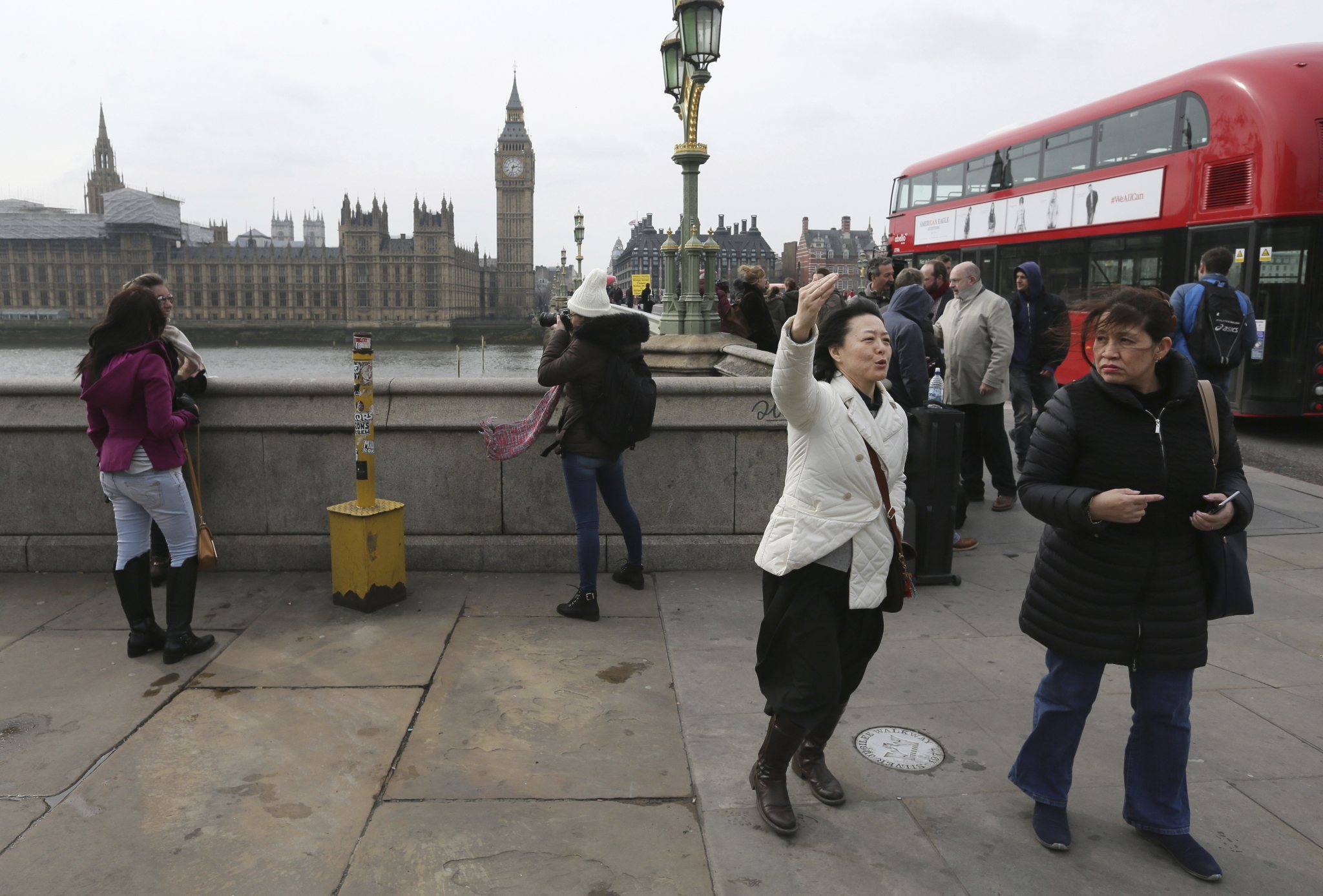
People gather on Westminster Bridge after it was reopened to the public Thursday, March 23, 2017, following an attack on Wednesday when a man drove a car into pedestrians then stabbed a police officer to death before being fatally shot by police within Parliament’s grounds. The IS-linked Aamaq news agency said Thursday that the person who carried out the “attack in front of the British parliament in London was a soldier of the Islamic State.” (AP Photo/Tim Ireland)
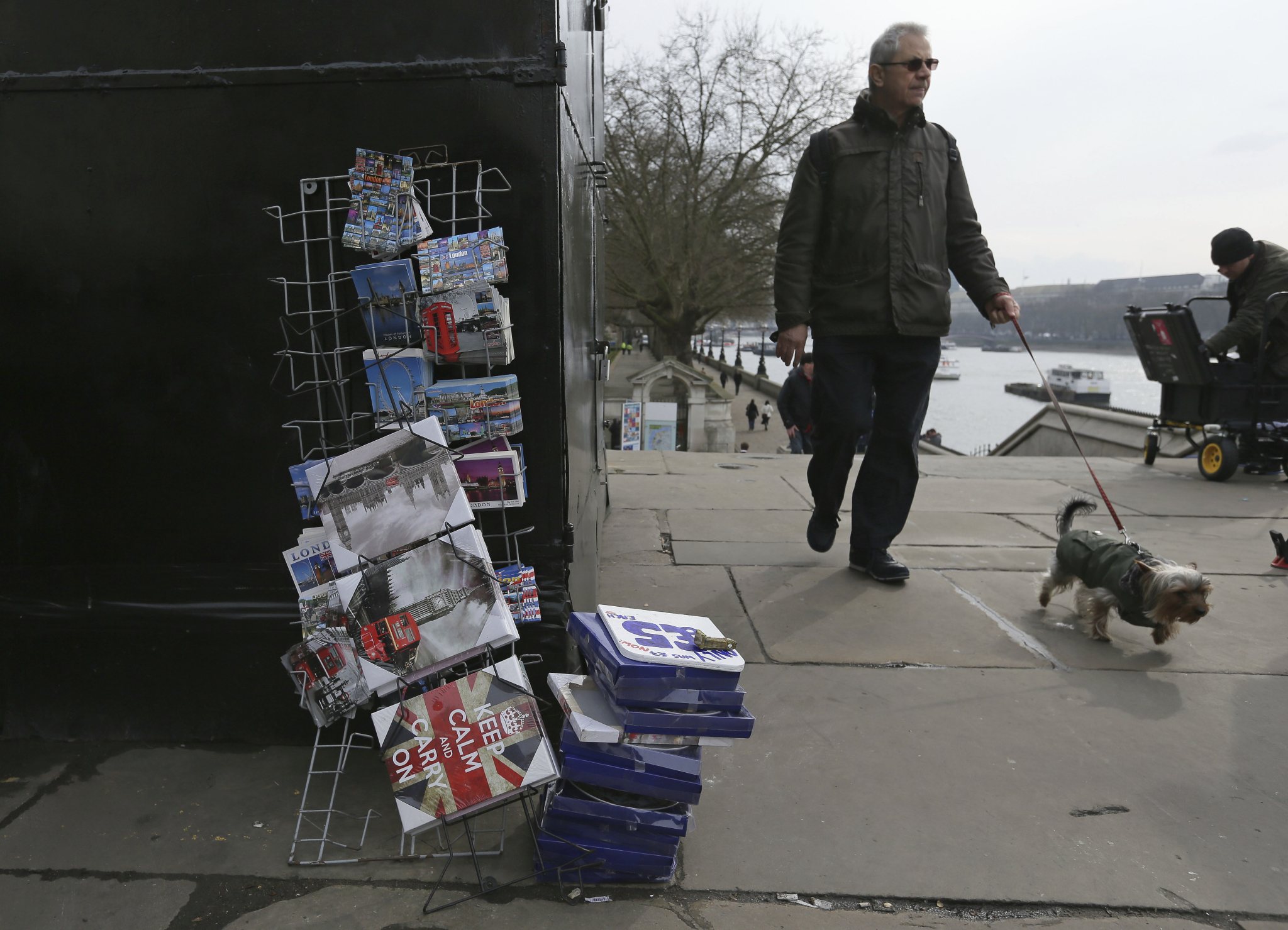
A man and his dog walk past a souvenir stall on Westminster Bridge after it was reopened to the public Thursday, March 23, 2017, following an attack on Wednesday when a man drove a car into pedestrians then stabbed a police officer to death before being fatally shot by police within Parliament’s grounds. The IS-linked Aamaq news agency said Thursday that the person who carried out the “attack in front of the British parliament in London was a soldier of the Islamic State.” (AP Photo/Tim Ireland)
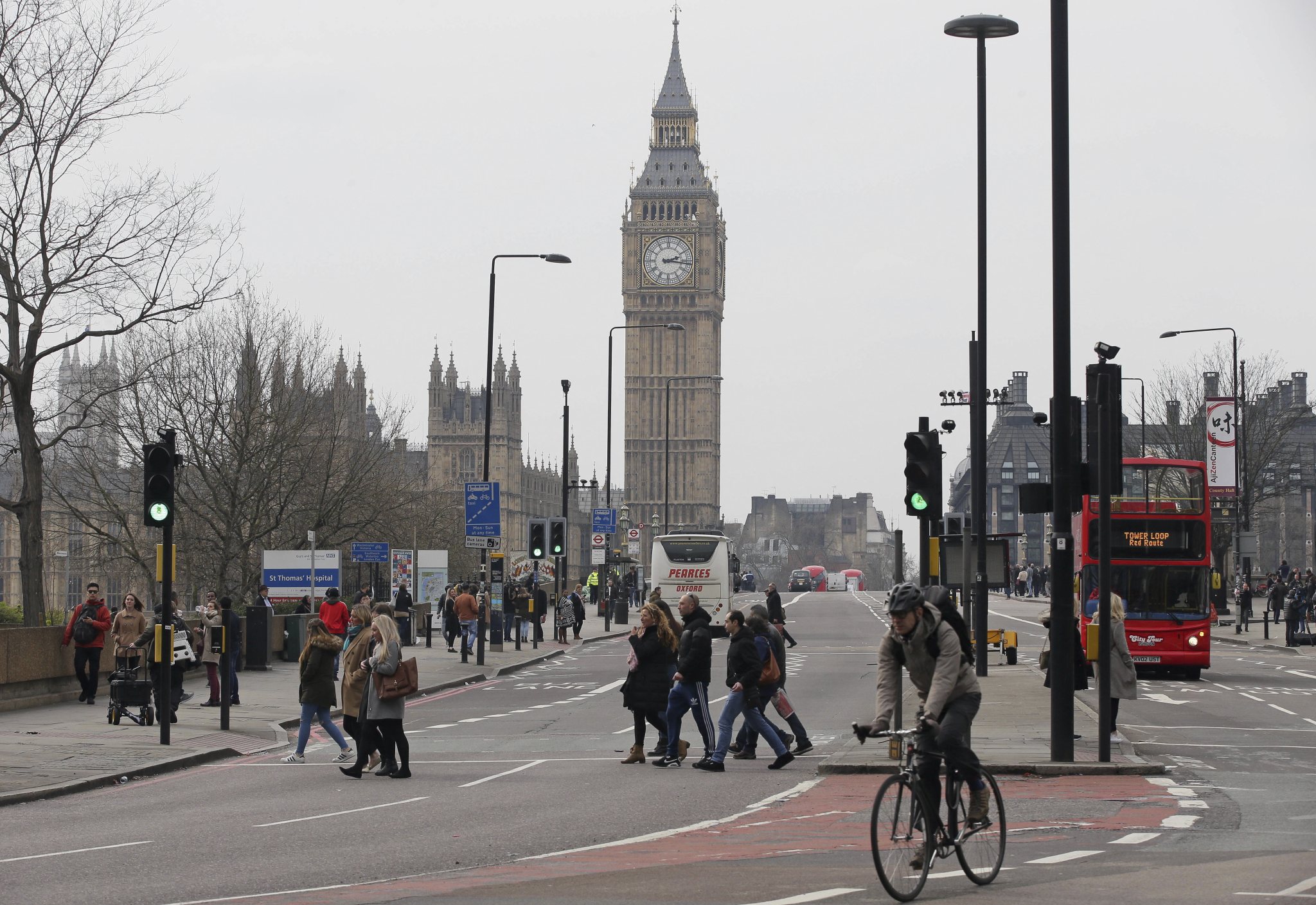
People and vehicles cross Westminster Bridge after it was reopened to the public Thursday, March 23, 2017, following an attack on Wednesday when a man drove a car into pedestrians then stabbed a police officer to death before being fatally shot by police within Parliament’s grounds. The IS-linked Aamaq news agency said Thursday that the person who carried out the “attack in front of the British parliament in London was a soldier of the Islamic State.” (AP Photo/Tim Ireland)
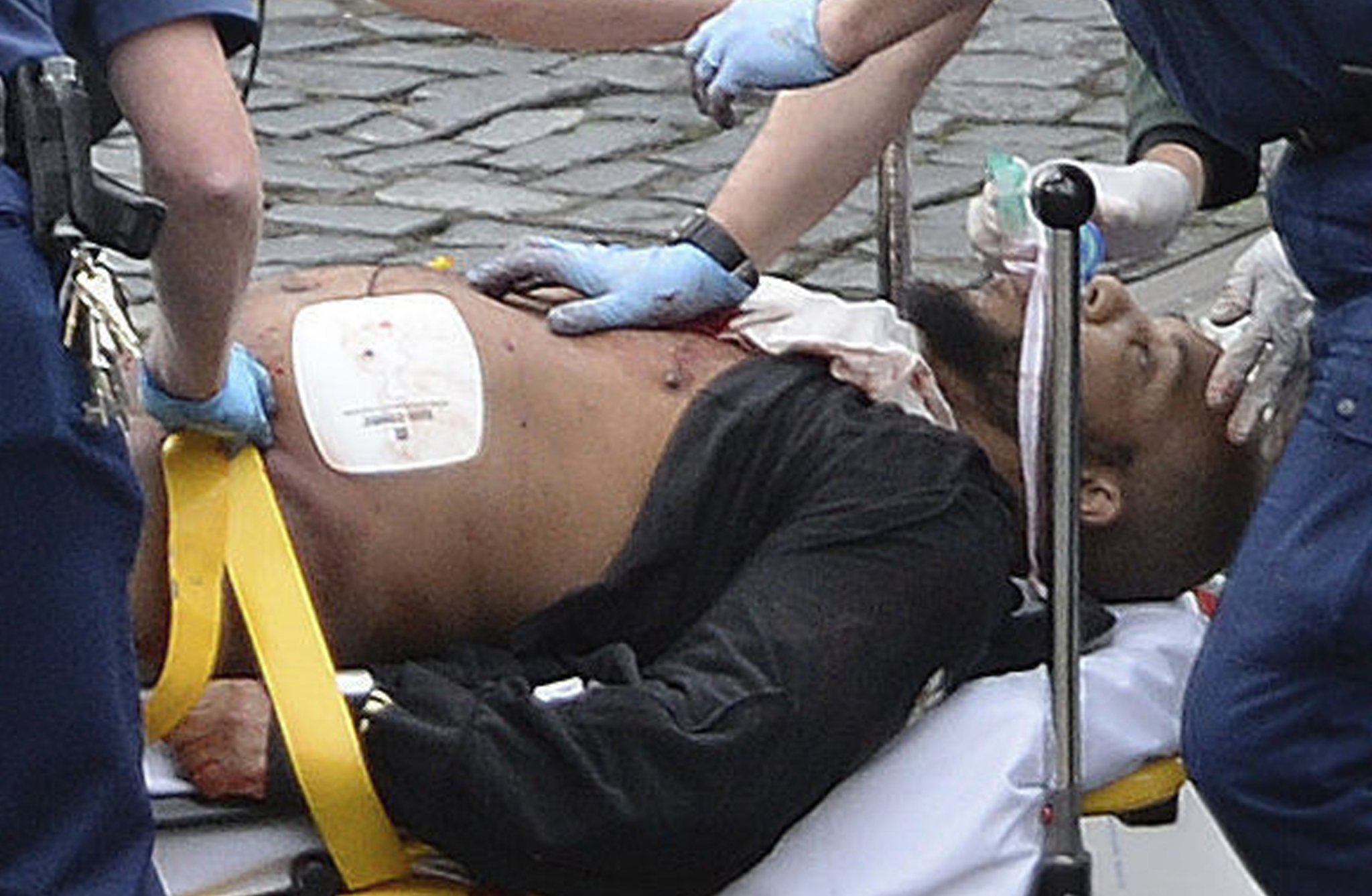
FILE- In this March 22, 2017 file photo, the attacker Khalid Masood is treated by emergency services outside the Houses of Parliament London. British Police named on Thursday March 23, 2017, Khalid Masood as The Houses of Parliament attacker. (Stefan Rousseau/PA via AP, File).
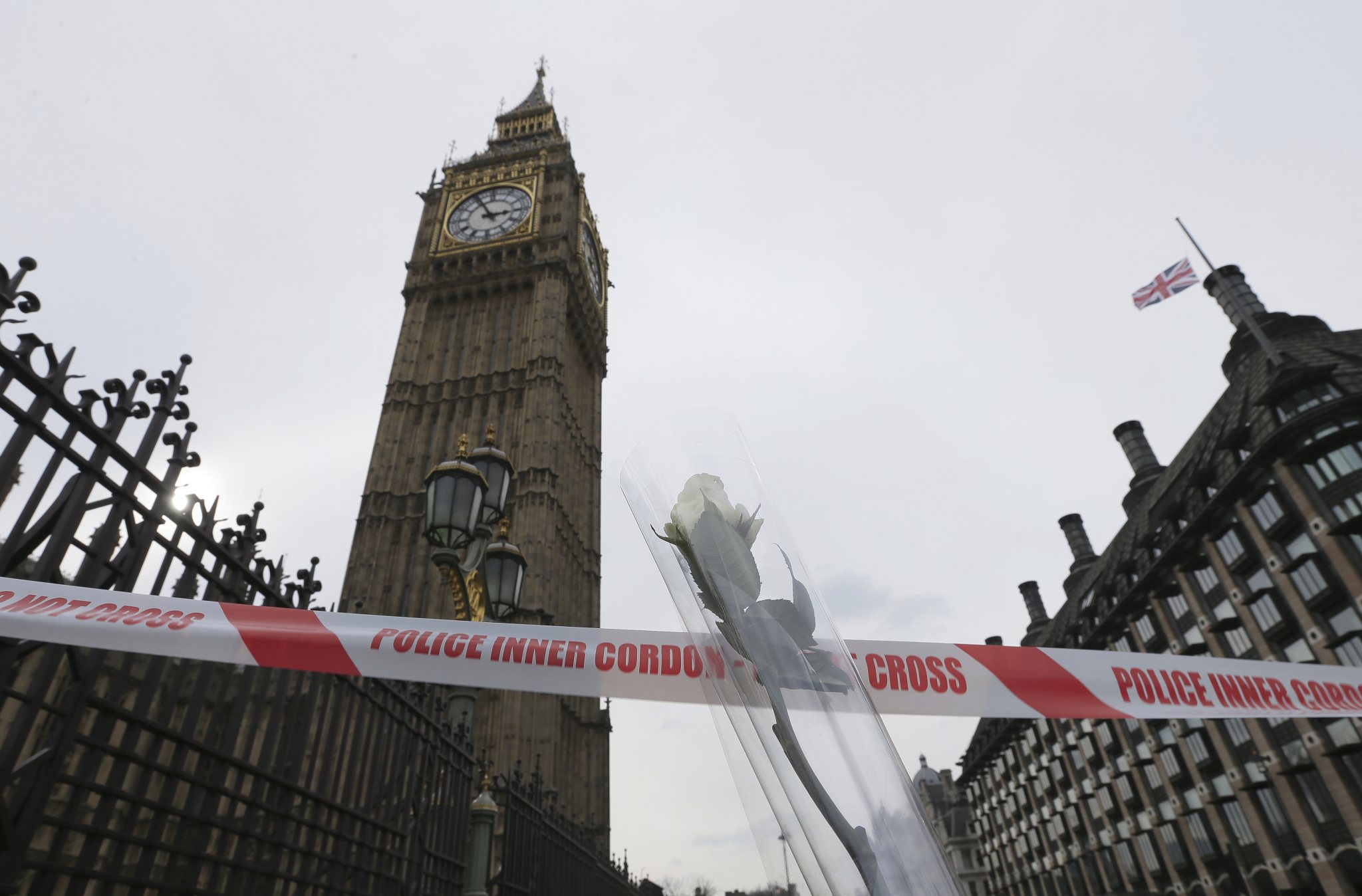
A singles white rose, a tribute to the victims of Wednesday’s attack, is placed near the Houses of Parliament in London, Thursday March 23, 2017. On Wednesday a knife-wielding man went on a deadly rampage, first driving a car into pedestrians then stabbing a police officer to death before being fatally shot by police within Parliament’s grounds in London. (AP Photo/Tim Ireland)
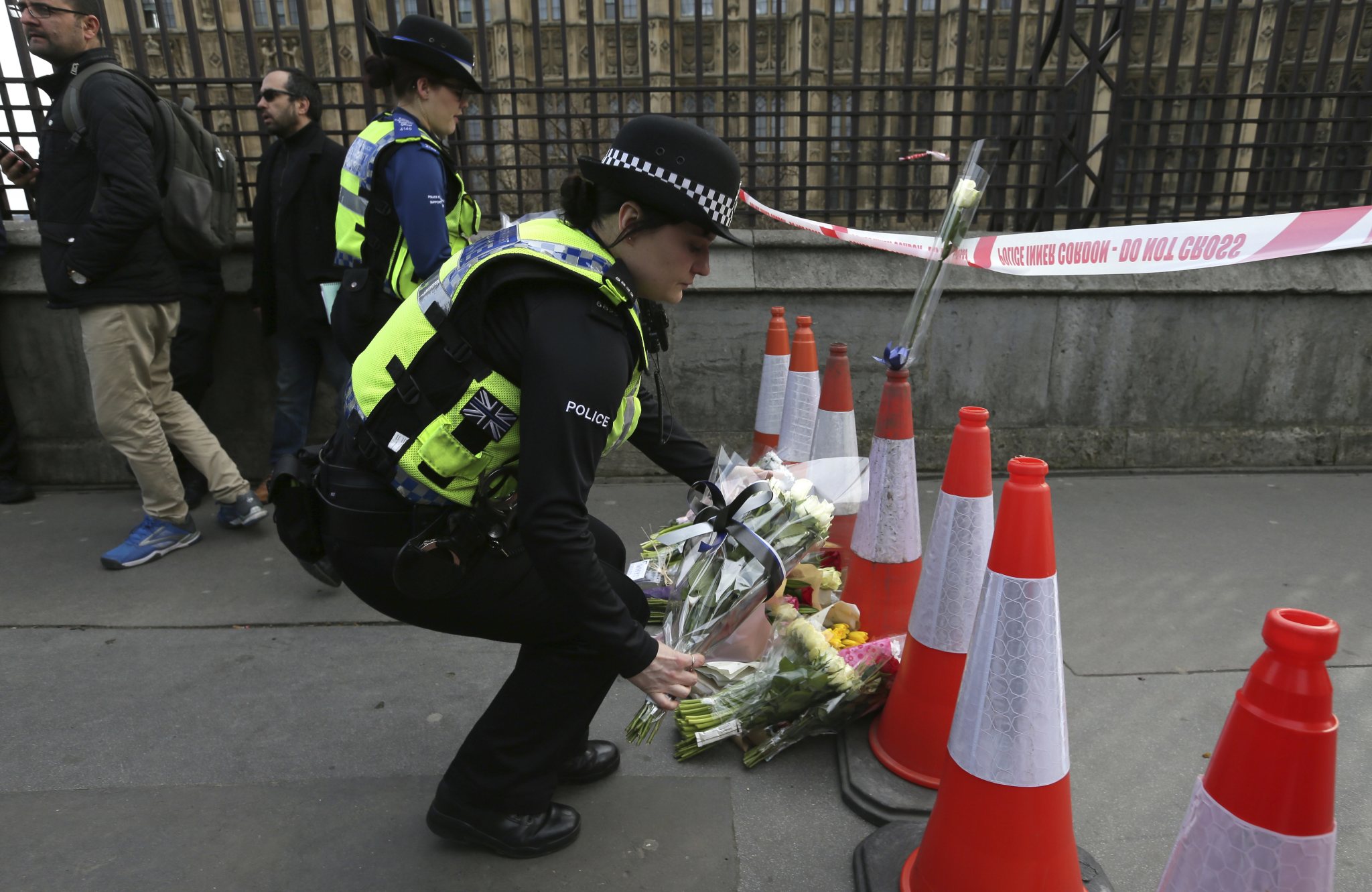
Police officers lays flowers as part of a floral tribute to the victims of Wednesday’s attack placed near the Houses of Parliament in London, Thursday March 23, 2017. On Wednesday a knife-wielding man went on a deadly rampage, first driving a car into pedestrians then stabbing a police officer to death before being fatally shot by police within Parliament’s grounds in London. (AP Photo/Tim Ireland)
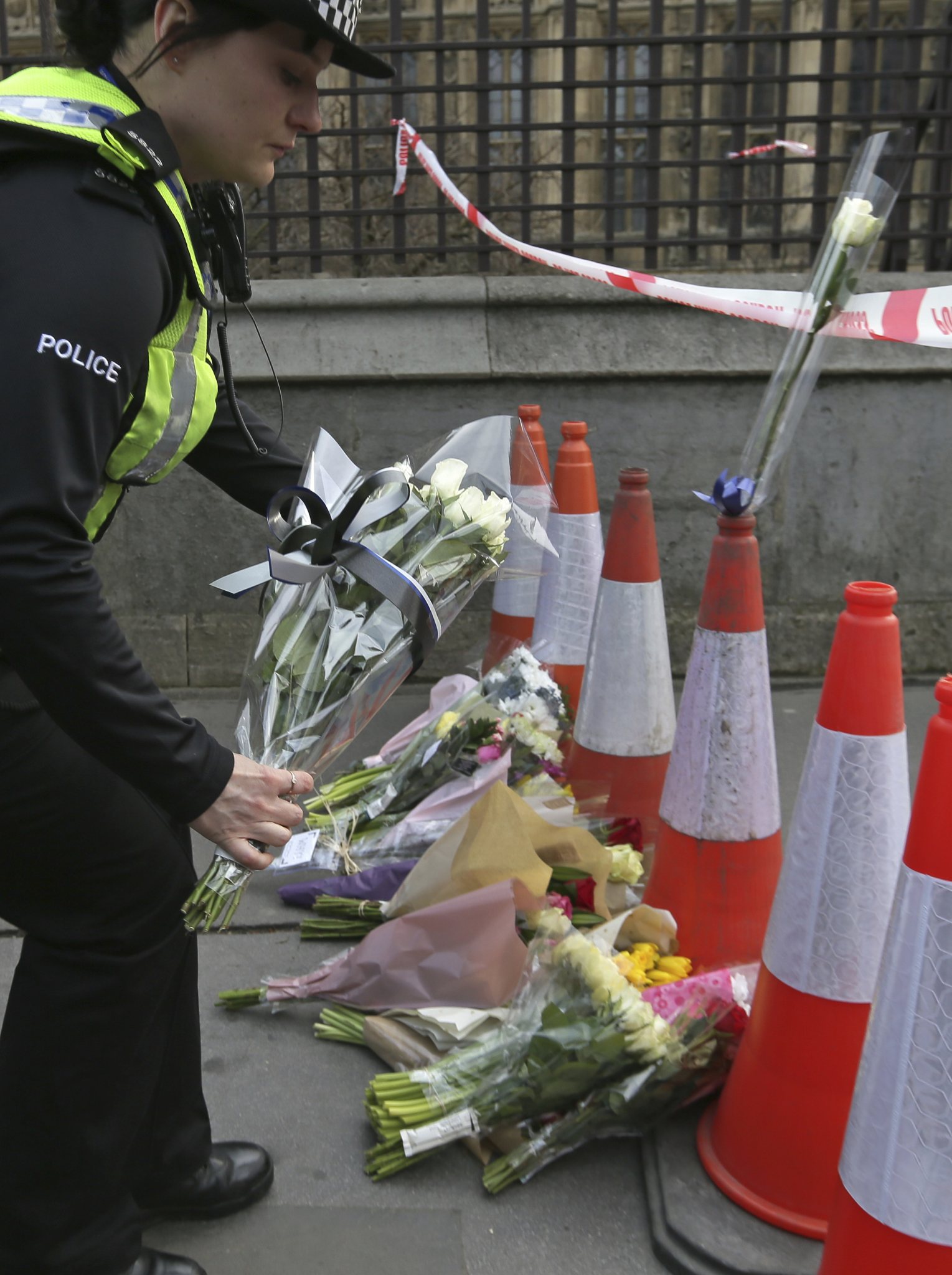
A police officer lays flowers as part of a floral tribute to the victims of Wednesday’s attack placed near the Houses of Parliament in London, Thursday March 23, 2017. On Wednesday a knife-wielding man went on a deadly rampage, first driving a car into pedestrians then stabbing a police officer to death before being fatally shot by police within Parliament’s grounds in London. (AP Photo/Tim Ireland)
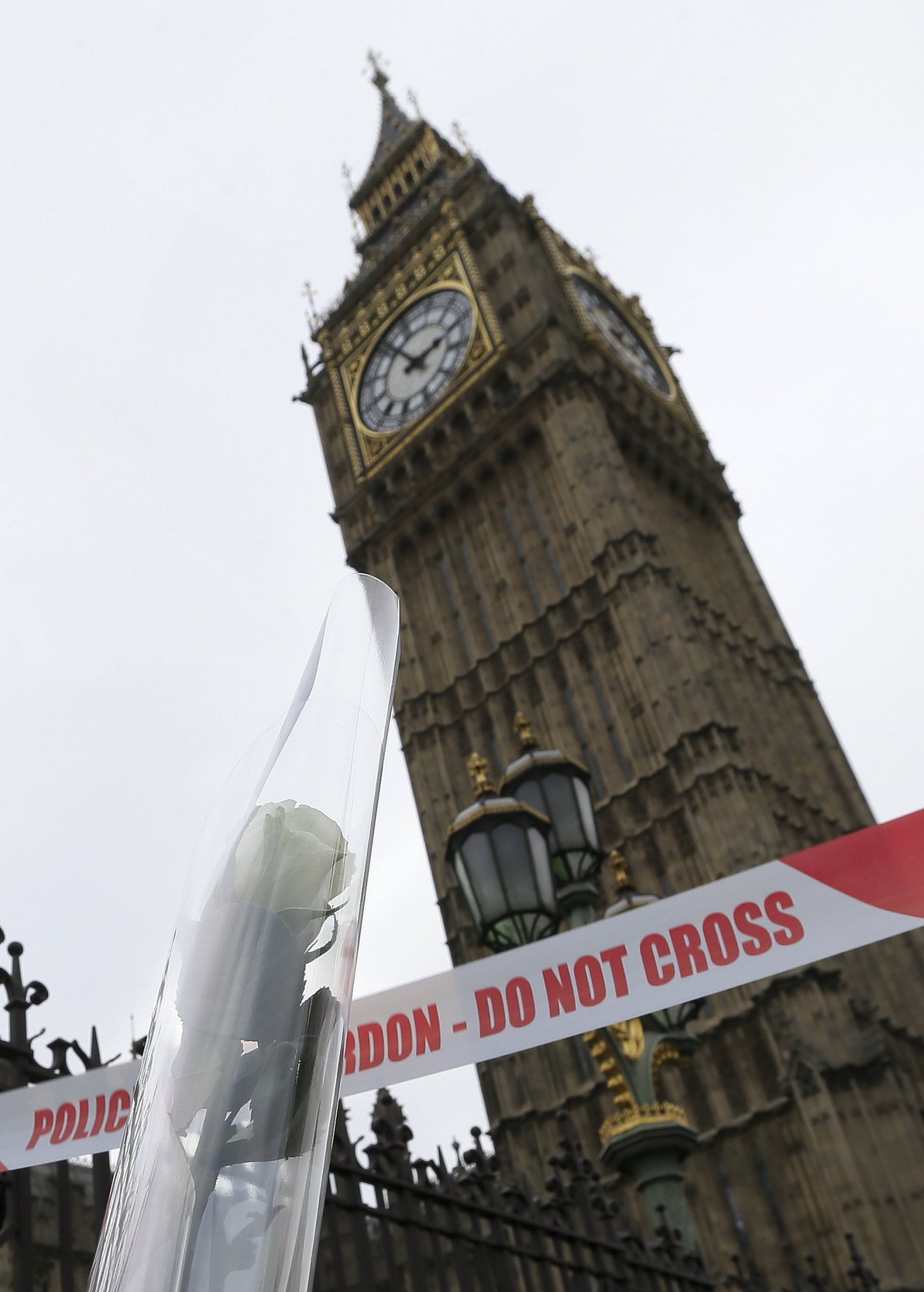
A singles white rose, a tribute to the victims of Wednesday’s attack, is placed near the Houses of Parliament in London, Thursday March 23, 2017. On Wednesday a knife-wielding man went on a deadly rampage, first driving a car into pedestrians then stabbing a police officer to death before being fatally shot by police within Parliament’s grounds in London. (AP Photo/Tim Ireland)
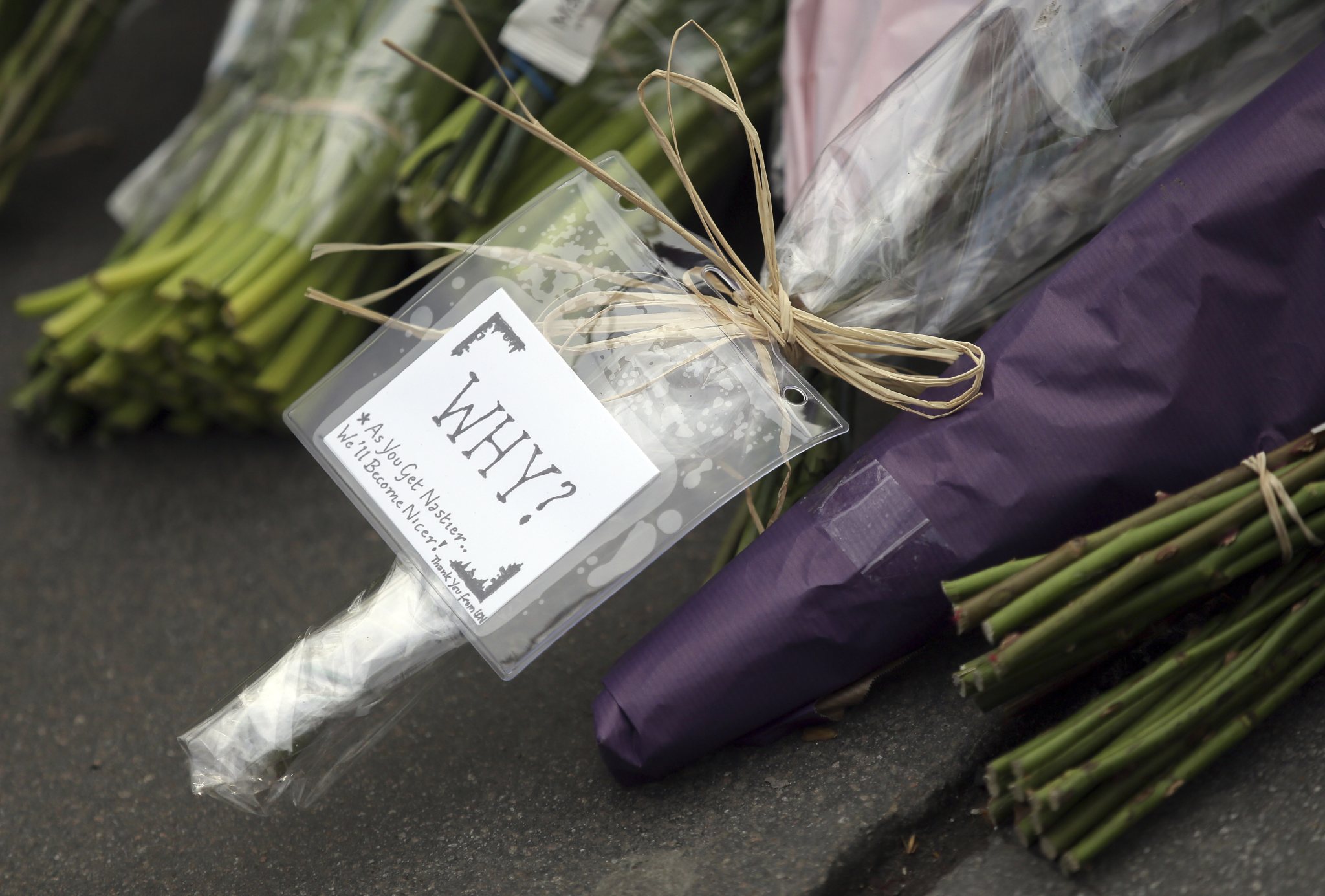
Floral tributes to the victims of Wednesday’s attack, are placed near the Houses of Parliament in London, Thursday March 23, 2017. On Wednesday a knife-wielding man went on a deadly rampage, first driving a car into pedestrians then stabbing a police officer to death before being fatally shot by police within Parliament’s grounds in London. (AP Photo/Tim Ireland)
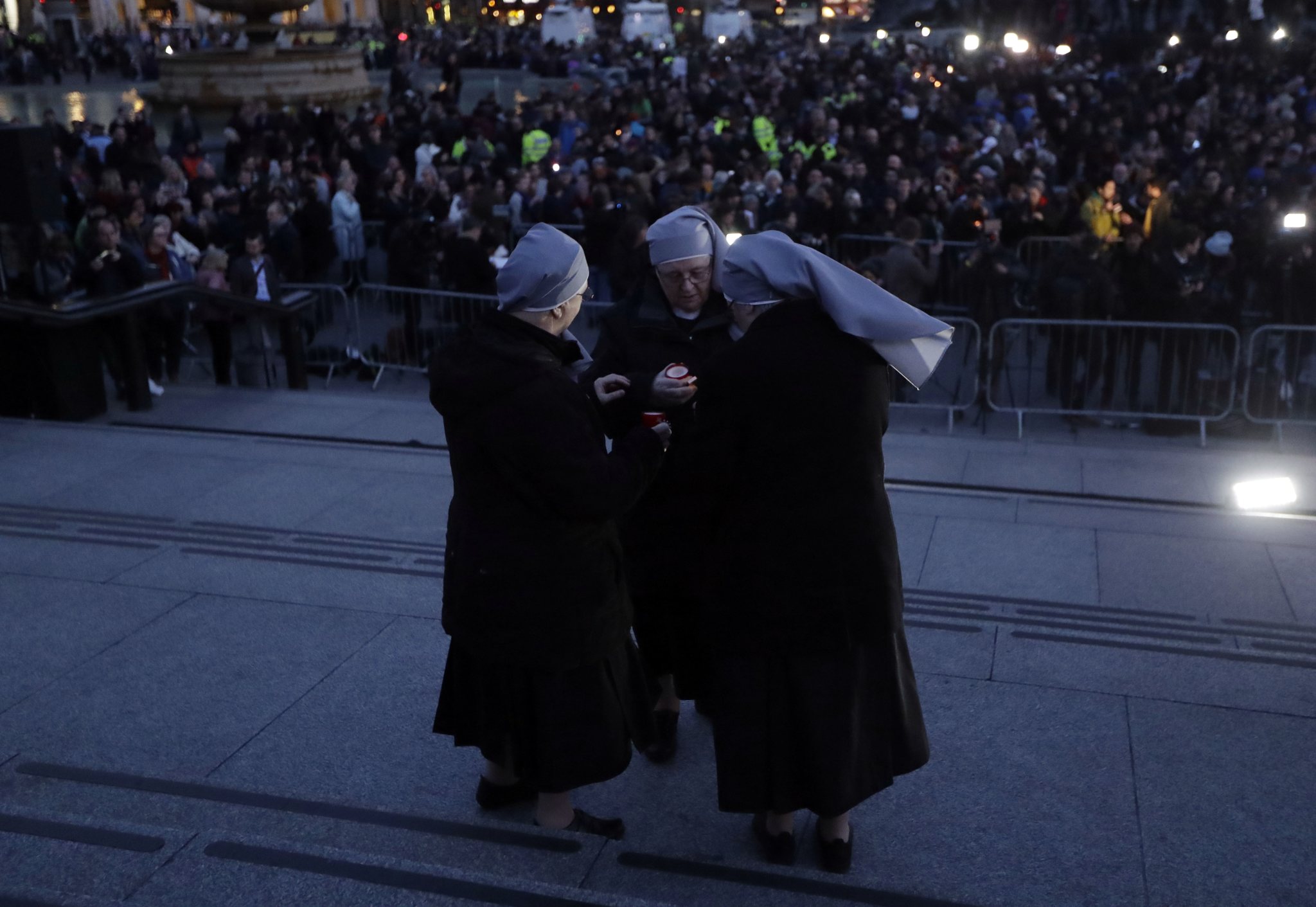
A group of nuns light candles at a vigil for the victims of Wednesday’s attack, at Trafalgar Square in London, Thursday, March 23, 2017. The Islamic State group has claimed responsibility for an attack by a man who plowed an SUV into pedestrians and then stabbed a police officer to death on the grounds of Britain’s Parliament. Mayor Sadiq Khan called for Londoners to attend a candlelit vigil at Trafalgar Square on Thursday evening in solidarity with the victims and their families and to show that London remains united. (AP Photo/Matt Dunham)
LONDON — Authorities on Thursday identified a 52-year-old Briton as the man who mowed down pedestrians and stabbed a policeman to death outside Parliament in London, saying he had a long criminal record and once was investigated for extremism — but was not currently on a terrorism watch list.
As millions of Londoners returned to work a day after a rampage that killed four victims and injured at least 30, British Prime Minister Theresa May had a message for other attackers: “We are not afraid.”
“Today we meet as normal — as generations have done before us, and as future generations will continue to do,” she said to lawmakers’ cheers in the House of Commons.
The Islamic State group claimed responsibility for Wednesday’s attack, which police said was carried out by Khalid Masood, a U.K.-born resident of the West Midlands in central England. Masood plowed a rented SUV into pedestrians on London’s Westminster Bridge, killing an American man and a British woman and injuring more than 30 people of almost a dozen nationalities. He then fatally stabbed a policeman inside the gates of Parliament before being shot to death by an officer.
A 75-year-old victim on the bridge died late Thursday of his wounds, police said.
The dead were identified as Kurt Cochran, 54, of Utah and British school administrator Aysha Frade, 43 — both struck on the bridge — and 48-year-old Constable Keith Palmer, a 15-year veteran of the Metropolitan Police.
The 75-year-old victim was not identified.
Police arrested eight people — three women and five men — on suspicion of preparing terrorist acts as authorities sought Masood’s motive and possible support network. One arrest was in London, while the others were in Birmingham. Police said they were searching properties in Birmingham, London and Wales.
Masood’s convictions between 1983 and 2003 included assault, weapons possession and public order offenses, London police said.
But he “was not the subject of any current investigations and there was no prior intelligence about his intent to mount a terrorist attack,” police added.
Many suspects in British terrorist attacks and plots have had roots in Birmingham, England’s second-largest city, and several local mosques have been linked to extremist clerics.
A home raided in Birmingham was one where Masood lived until late last year, a neighbor said.
As police investigated, Parliament got back to business, opening the day with a minute’s silence for the victims. May saluted the heroism of police and the bravery of ordinary Londoners.
“As I speak, millions will be boarding trains and airplanes to travel to London and to see for themselves the greatest city on Earth,” she said. “It is in these actions — millions of acts of normality — that we find the best response to terrorism. A response that denies our enemies their victory, that refuses to let them win.”
In 1,000-year-old Westminster Hall, the oldest part of Parliament’s buildings, politicians, journalists and parliamentary staff lined up to sign a book of condolences. One uniformed policeman wrote: “Keith, my friend, will miss you.”
Some parliamentarians said they were shaken by Wednesday’s attack, and all were somber. But they also were determined.
“There is no such thing as 100 percent security,” said Menzies Campbell, a member of the House of Lords. “We have to learn to live with that.”


