


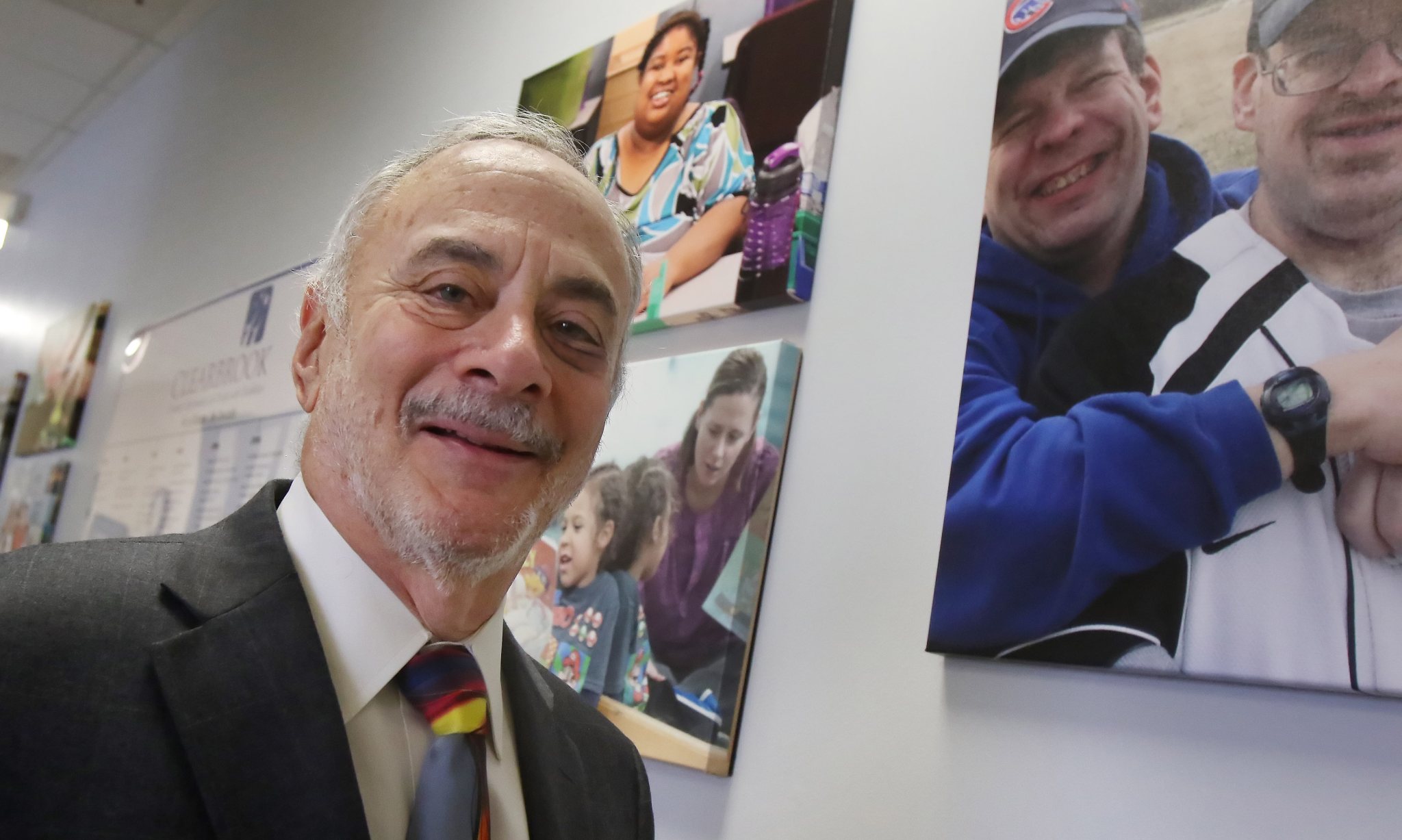
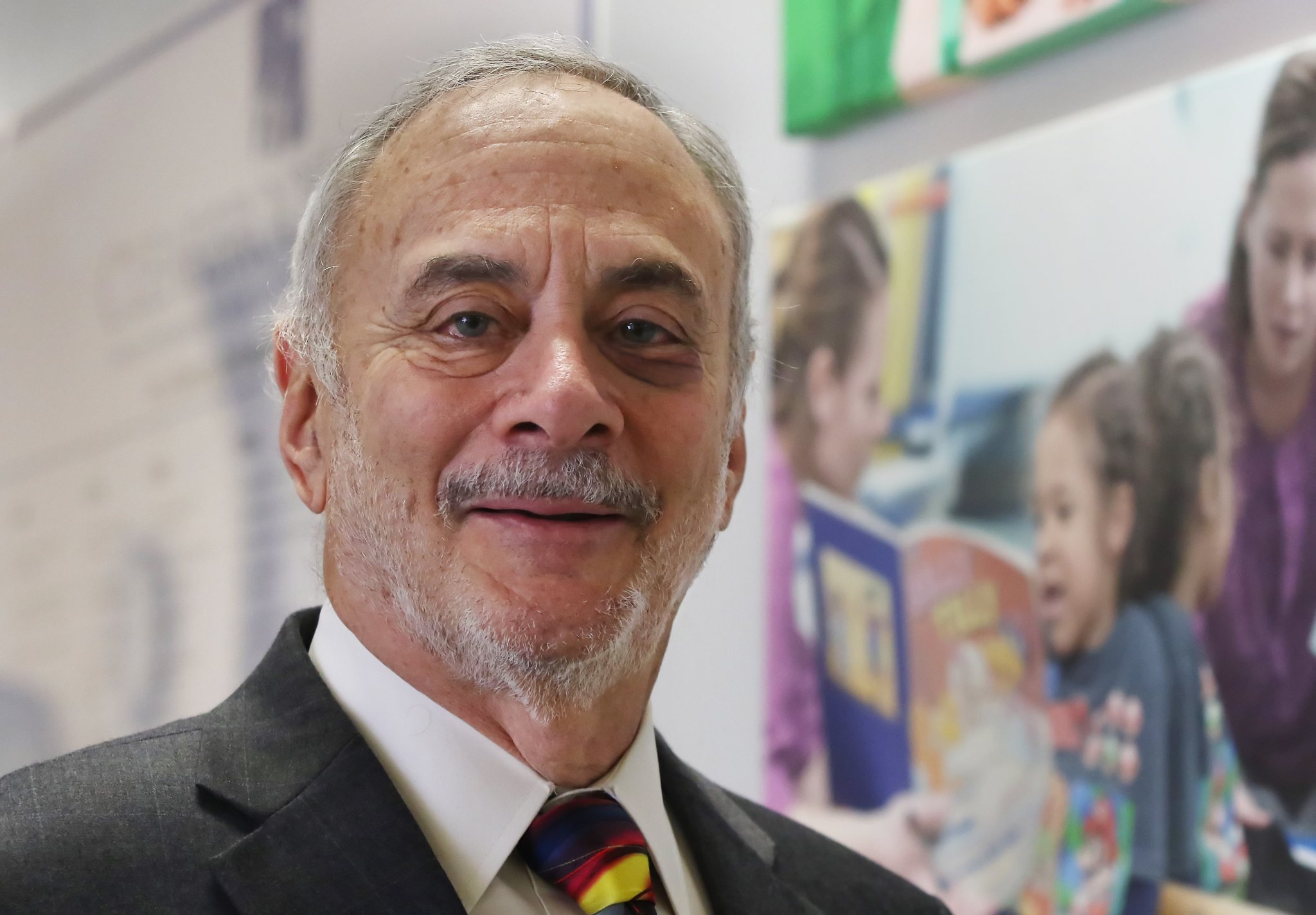



The passing of the torch at Clearbrook in Arlington Heights has begun.
After nearly 21 years as president and CEO of one of the largest organizations in the state serving children and adults with disabilities, Carl La Mell is preparing to step aside.
Officially, he will retire at the end of the month. But La Mell cleaned out his office late last month and his successor, Tony Di Vittorio, has moved in.
Staff members, clients and parents of children served by the agency are slowly coming to grips with his departure.
“Carl has set the stage for everything. He’s really built this place,” said Scott Lundal of Schaumburg, who stopped by La Mell’s office recently with his wife, Jan, and daughter, Kristin, to wish him well.
“As a parent and a former board member, you couldn’t ask for anything more,” Lundal said.
La Mell followed an unconventional path to his leadership role at Clearbrook. He earned a degree in economics from DePaul University and worked in business before landing a job in finance with Neumann Family Services in Chicago, another organization which that serves the disabled.
Over his 16 years with Neumann, La Mell transformed its growth, much like he would go on to do with Clearbrook.
Lundal recalls serving on the search committee that hired La Mell.
“I had one question for him at the time: Will you be here for the long haul,” Lundal says. “He said he would be, and he has.”
The growth of Clearbrook is La Mell’s legacy, Lundal said. At first glance, the numbers are staggering. Since La Mell took over in 1996, the agency’s budget has grown from $11 million to $40 million, and it now serves more than 7,000 children and adults in 160 communities.
Clearbrook also has become the largest provider of home-based services in Illinois. Its staff works with about 1,100 families — in their own homes — to support children and adults with disabilities.
Staff members serve another 5,000 children in its birth to 3-year old early intervention program in homes throughout North and Northwest suburban Cook County. They take an average of 200 new cases each month, while another 200 age out.
One of their biggest growth areas is in group homes. When La Mell joined Clearbrook, the organization had six homes in Rolling Meadows and Arlington Heights. They now have 50 in Cook, Lake and DuPage counties, where 325 individuals receive residential care. Communities served include Arlington Heights, Bensenville, Buffalo Grove, Carpentersville, Elk Grove Village, Hanover Park, Hoffman Estates, Mount Prospect, Palatine, Schaumburg and Wheeling.
“Carl’s a tough negotiator — for Clearbrook,” said Sue Tharp, a Realtor with Arlington Heights-based RE/MAX Suburban, who often represents the agency in home purchases.
La Mell laughs at that description, but says Clearbrook’s work to have adult clients living in local neighborhoods is no laughing matter.
“The presence today is so much better,” La Mell said. “People are a lot more accepting, and that can have a lasting effect.
“The more people know what you do,” he adds, “the more you break down barriers.”
The increase in group homes also reflects more families seeking individualized services for their loved ones with developmental disabilities. That includes those on the autism spectrum, which now makes up the largest percentage of Clearbrook clients.
“The trend is that families want small living arrangements for their children, so Clearbrook has had to meet those changing needs,” La Mell said.
With more group homes in the suburbs, Clearbrook has brought its services to those communities in the form of resource centers offering day programs. Currently, 750 adults attend day programs, located in Rolling Meadows, Schaumburg, Palatine, Northbrook, Crystal Lake, Evanston and in Park Ridge, whose Choice Center opened in October.
All of which explains why the name Clearbrook has become synonymous with service for children and adults with disabilities.
“We work as hard as anybody in branding our name in the community,” La Mell said. “It builds recognition, and that helps in our fundraising efforts and in providing better services.”
Financially, the organization has been able to weather the Illinois budget stalemate, La Mell said, thanks to the Ligas consent decree, which came down in August of last year. The ruling obligated the state to make its Medicaid payments for residents with disabilities.
Under La Mell’s leadership, Clearbrook has drawn committed benefactors, both individuals and corporations, who continue to support its mission. Take the Coleman Foundation in Chicago, which for the fourth year matched funds donated to Clearbrook — up to $10,000 — on Giving Tuesday. Sealing Industries in Cary announced a similar matching grant challenge.
“We’ve been incredibly fortunate,” La Mell said. “We’re challenged daily to meet the needs of persons with disabilities, and that’s been our driving force. We’re trying to help as many people as possible.”

