


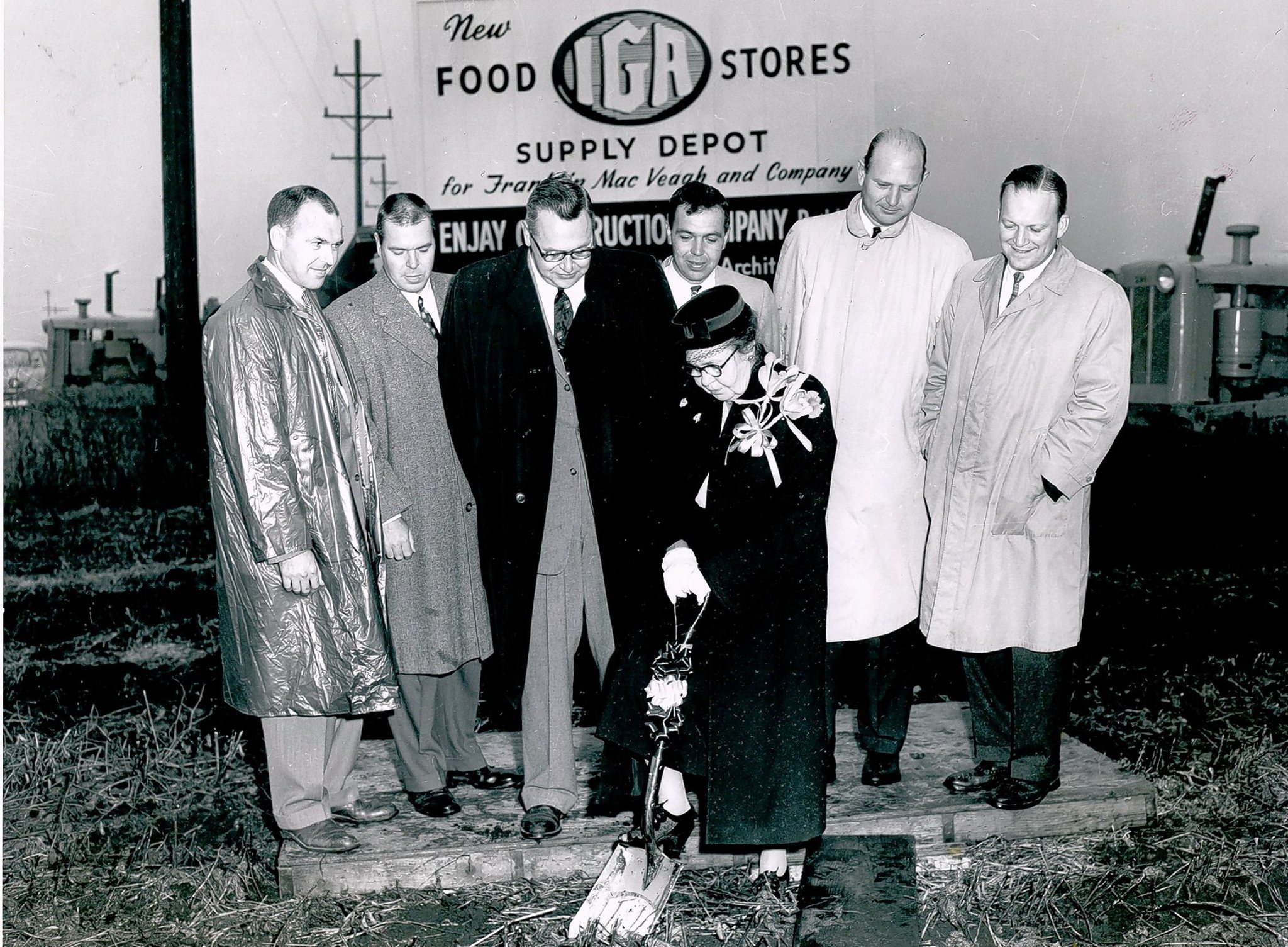


In 1955, the Hotpoint Co., a division of General Electric, purchased 770 acres in Elk Grove Township to develop the largest single purchase in the Chicago area up to that time. The goal was to include the headquarters, research, manufacturing, warehouse and distribution facilities on the site.
Due to a recession, the building was not completed and the land was eventually sold to Centex Inc., a large construction and development firm responsible for the majority of residential and business construction in Elk Grove Village.
Marshall Bennett and Louis Kahnweiler were the prime developers of the Centex Industrial Park, a preplanned, five-square-mile tract.
Centex developed a master plan to incorporate both residential and business development in Elk Grove Village. Consideration was given to proximity of railroads and the airport, and roadways were planned so that trucks and larger equipment would not need to pass through residential areas.
Prevailing winds are from the southwest so Centex put the industrial park to the east so odors would be away from residential. It set up strict zoning laws to require buildings be properly maintained and to prevent heavier industries from coming.
By the summer of 1957, three companies began construction: The Howell Tractor and Equipment Co., the IGA Food Store distribution center and the Crown Phoestat and Supply Co.
At first, growth was at a rate of 3-4 new businesses per year. Starting in 1959, following the construction of Sola, the first extra-large industrial plant, the increase was as many as 60 new businesses per year. By 1961, it was the fastest growing industrial complex in the nation.
By the village’s 25th anniversary in 1981, more than 1,700 firms were located in the park, employing more than 40,000 people.
In 1982, Elk Grove Village gained more manufacturing pants than any other suburb in the country. Starting around 1989, there was a steady gain of 100 new companies per year for the next 10 years.
In 1996, a 12-member commission of business representatives, residents and village officials began developing a master plan for the modernization and beautification of the business park, which was carried out between 1998 and 2008.
In 1999, Elk Grove Village boasted more than 3,500 businesses: approximately 1,700 manufacturing and distribution companies, 1,200 service industries, and 600 commercial operations, including businesses from dozens of countries and more than 100 Japanese firms.
The Master Plan Update 2011 outlined programs that target more than $95 million in investments to the business park. In 2013, the village allocated funds to infrastructure improvements throughout the business park and partnered with the Elk Grove Village Industrial/Commercial Revitalization Commission to compile “The Elk Grove Book” to serve as a tool to promote local commerce and industry.
• This is one of 60 notes about Elk Grove Village history being published to mark the town’s anniversary. The museum, part of the Elk Grove Park District, is actively searching for material. If you have an item to donate, contact the curator at (847) 228-3549 or sdenninger@elkgroveparks.org.

