At least 17 dead amid opposition protests in Congo’s capital
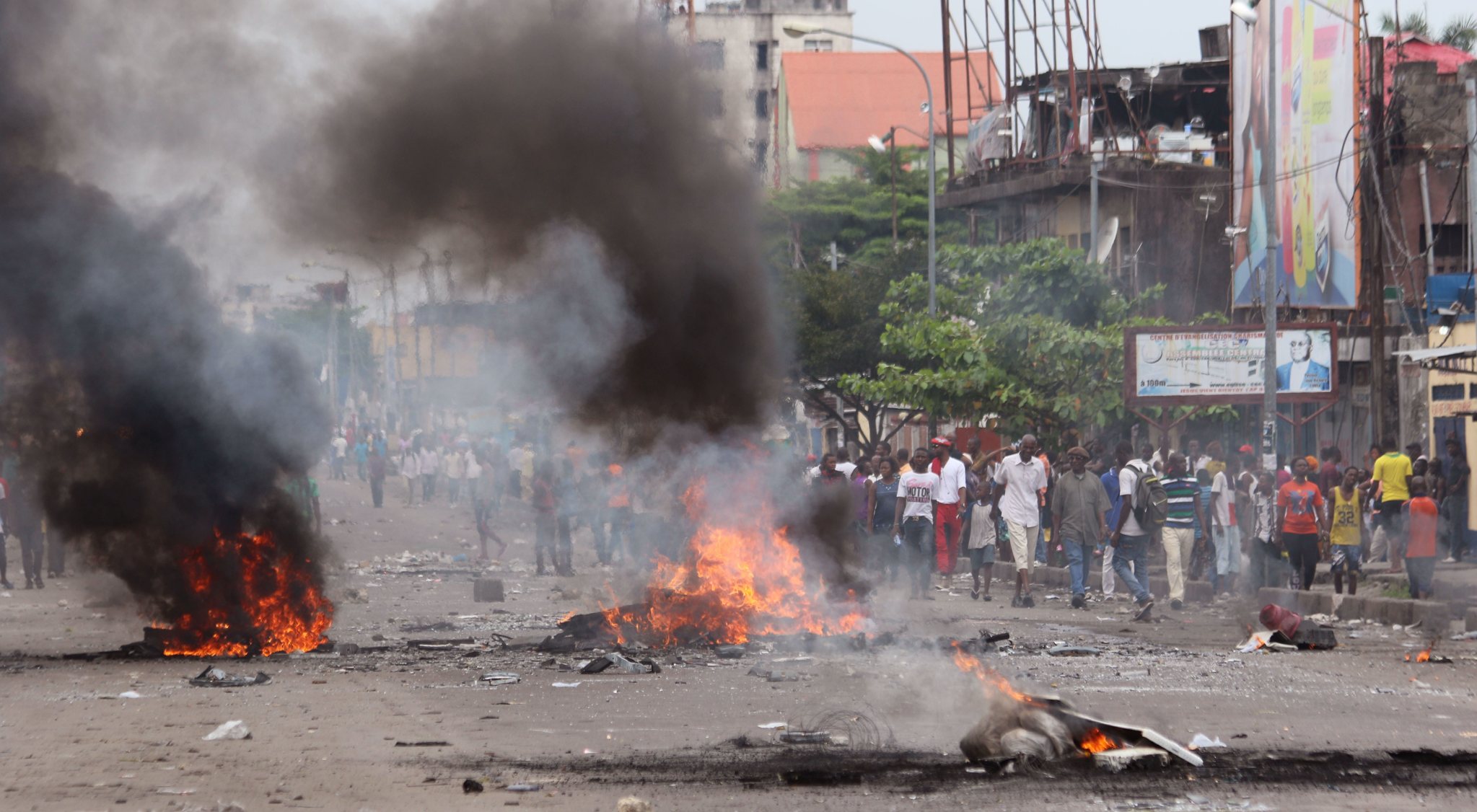
People stand near burning debris during election protests on Monday in Kinshasa, Democratic Republic of Congo. Witnesses say at least four people are dead after opposition protests against a delayed presidential election turned violent in Congo’s capital. (Associated Press)
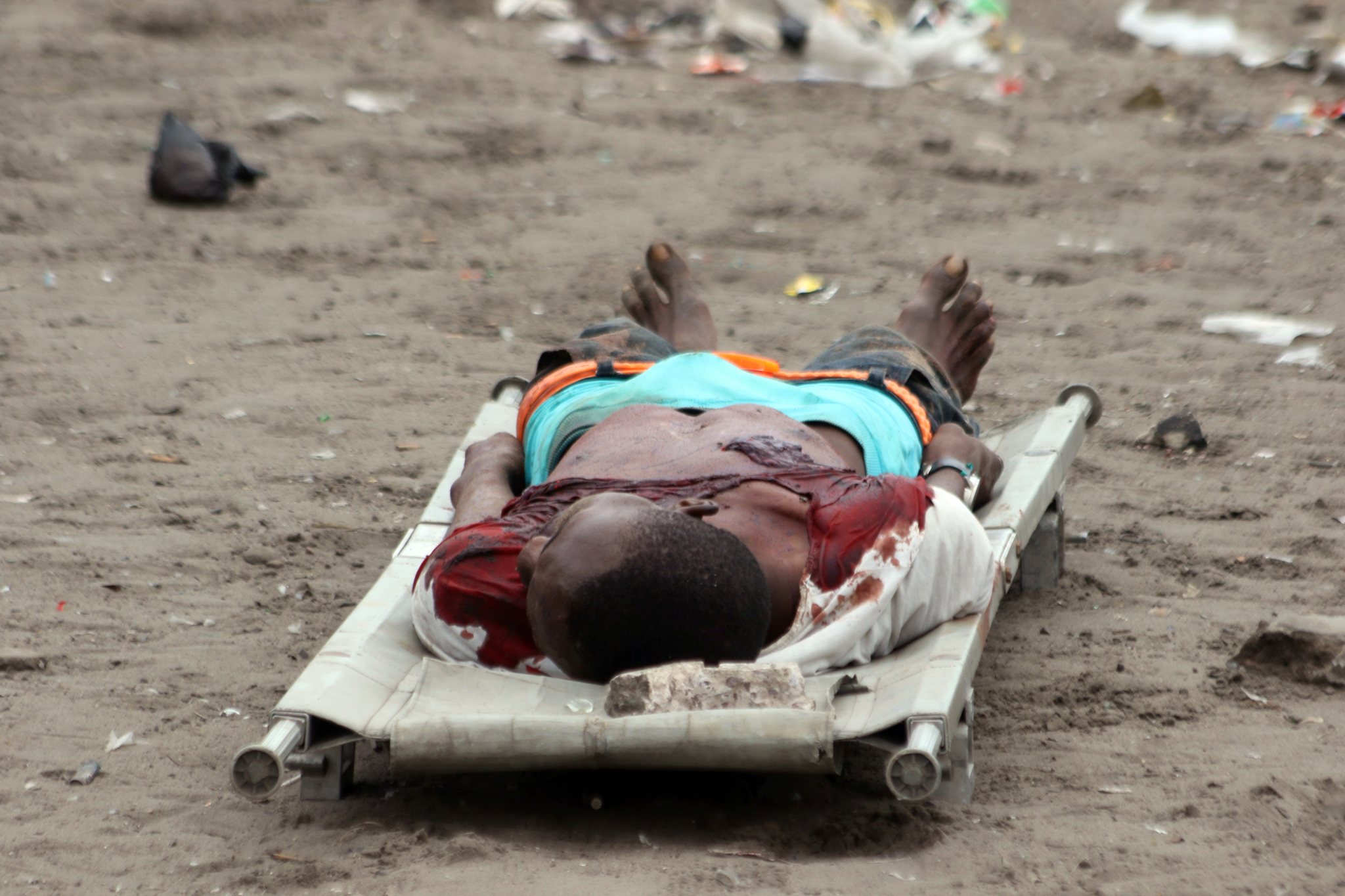
The body of a man killed during election protests lies in the street, in Kinshasa, Democratic Republic of Congo, Monday, Sept. 19, 2016. Witnesses say at least four people are dead after opposition protests against a delayed presidential election turned violent in Congo's capital. The protests were organized by activists who are opposed to longtime President Joseph Kabila, who is now expected to stay in office after his mandate ends in December. (AP Photo/John Bompengo)
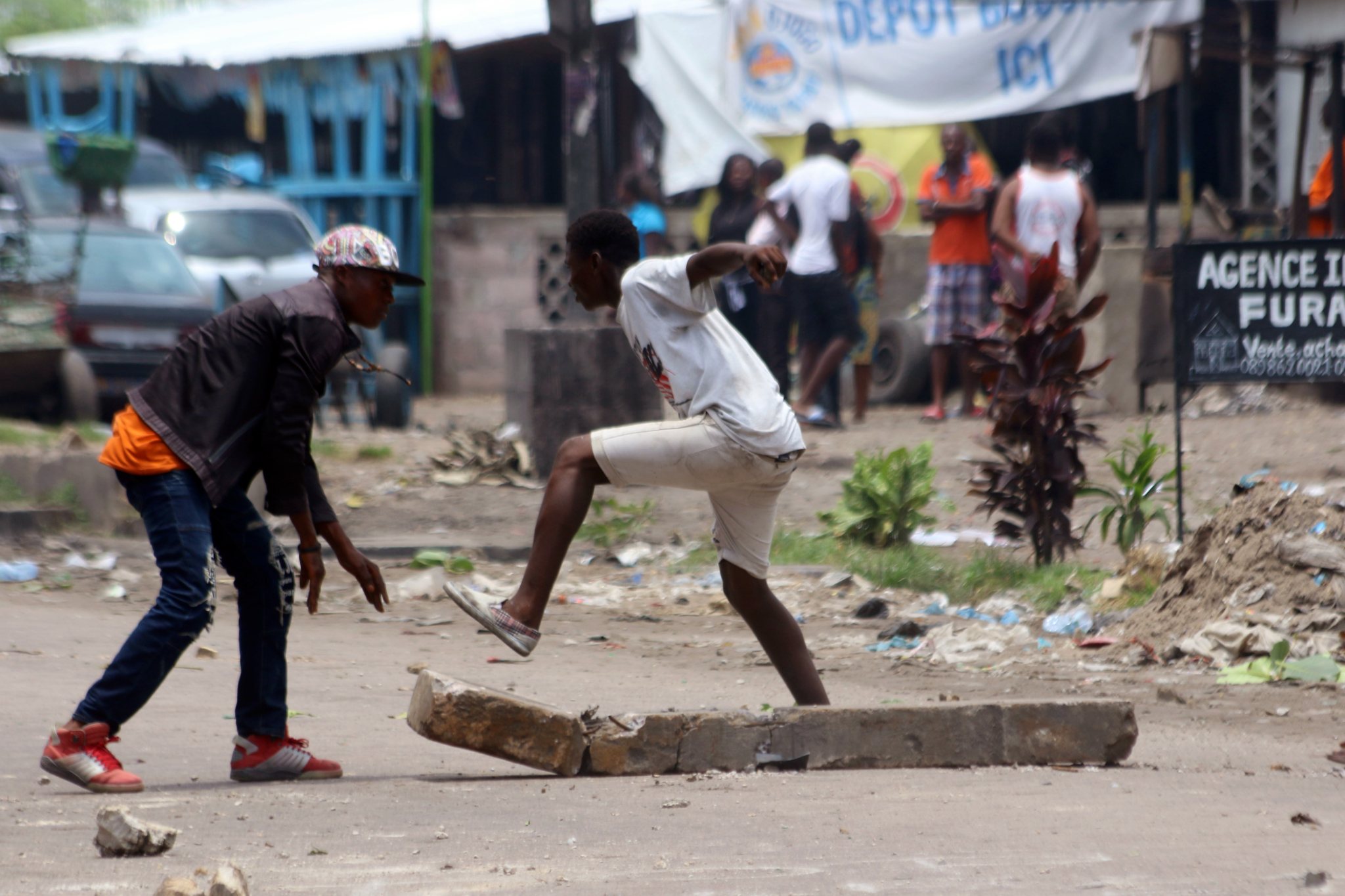
Men break off bits of rock during a protest in Kinshasa in Kinshasa, Democratic Republic of Congo, Monday, Sept. 19, 2016. Witnesses say at least four people are dead after opposition protests against a delayed presidential election turned violent in Congo's capital. The protests were organized by activists who are opposed to longtime President Joseph Kabila, who is now expected to stay in office after his mandate ends in December. (AP Photo/John Bompengo)
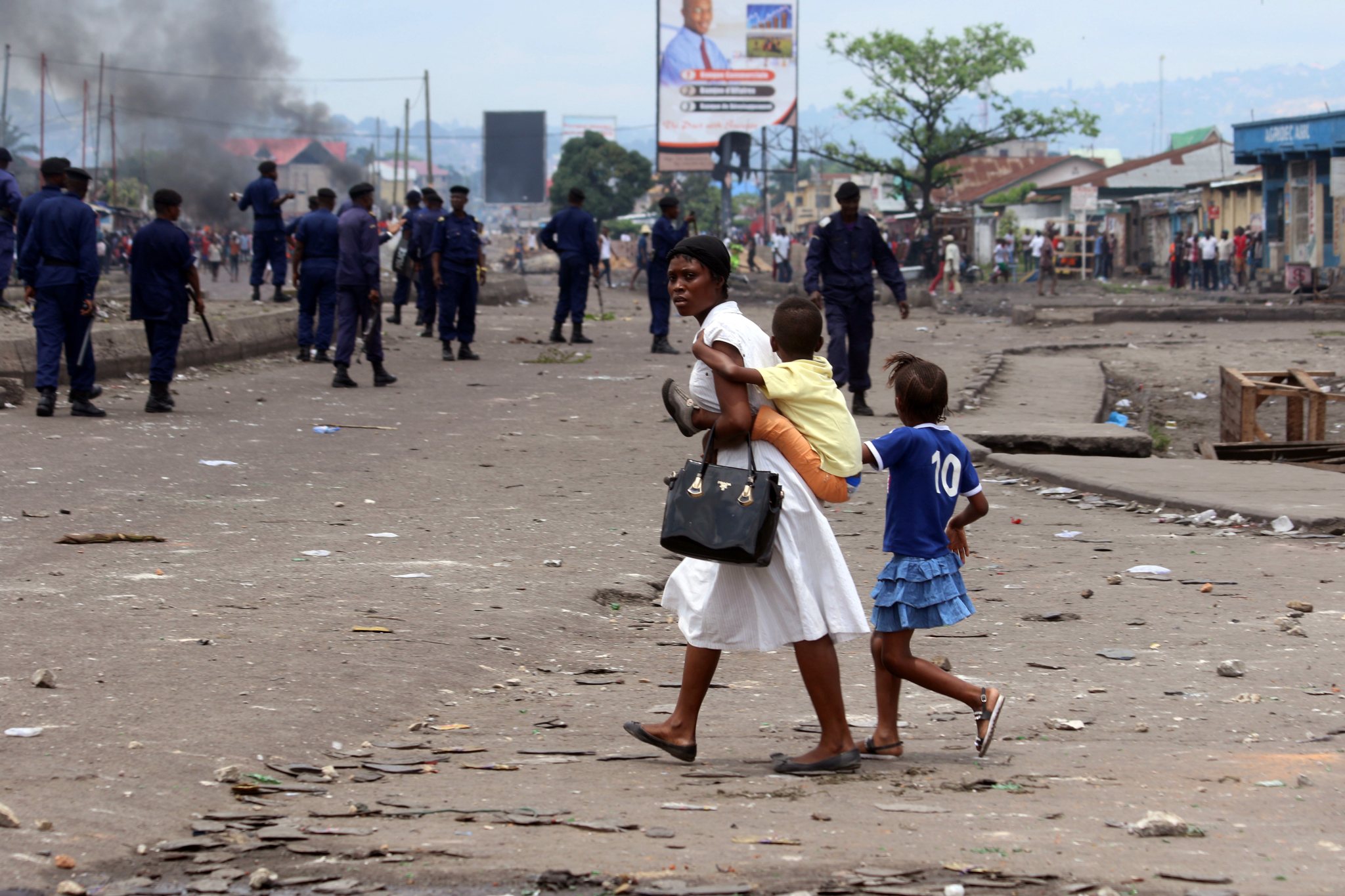
A family pass near Congolese riot police during a protest in Kinshasa, Democratic Republic of Congo, Monday, Sept. 19, 2016. Witnesses say at least four people are dead after opposition protests against a delayed presidential election turned violent in Congo's capital. The protests were organized by activists who are opposed to longtime President Joseph Kabila, who is now expected to stay in office after his mandate ends in December. (AP Photo/John Bompengo)
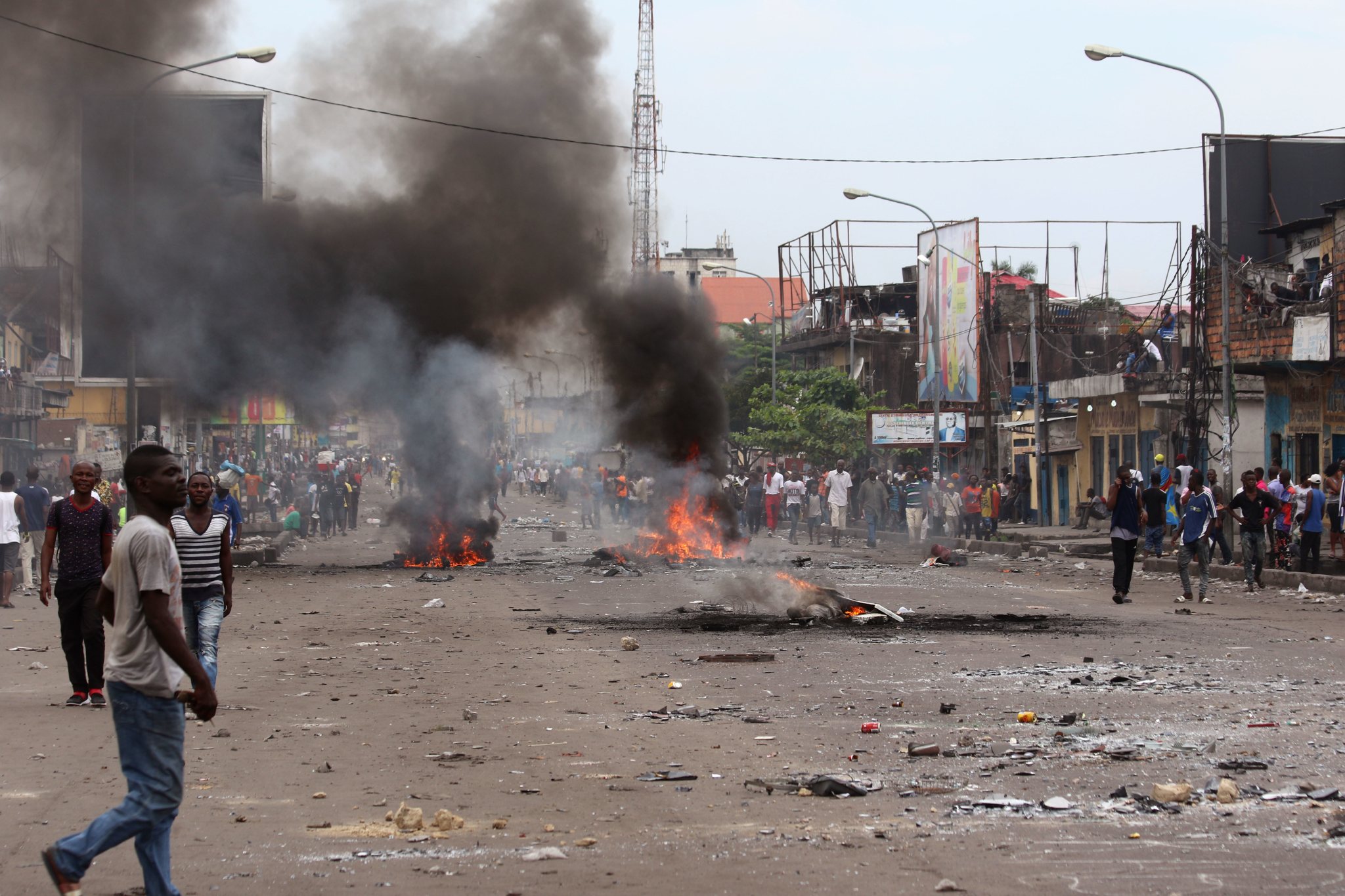
A man crosses a road near burning debris, during election protests in Kinshasa, Democratic Republic of Congo, Monday, Sept. 19, 2016. Witnesses say at least four people are dead after opposition protests against a delayed presidential election turned violent in Congo's capital. The protests were organized by activists who are opposed to longtime President Joseph Kabila, who is now expected to stay in office after his mandate ends in December. (AP Photo/John Bompengo)
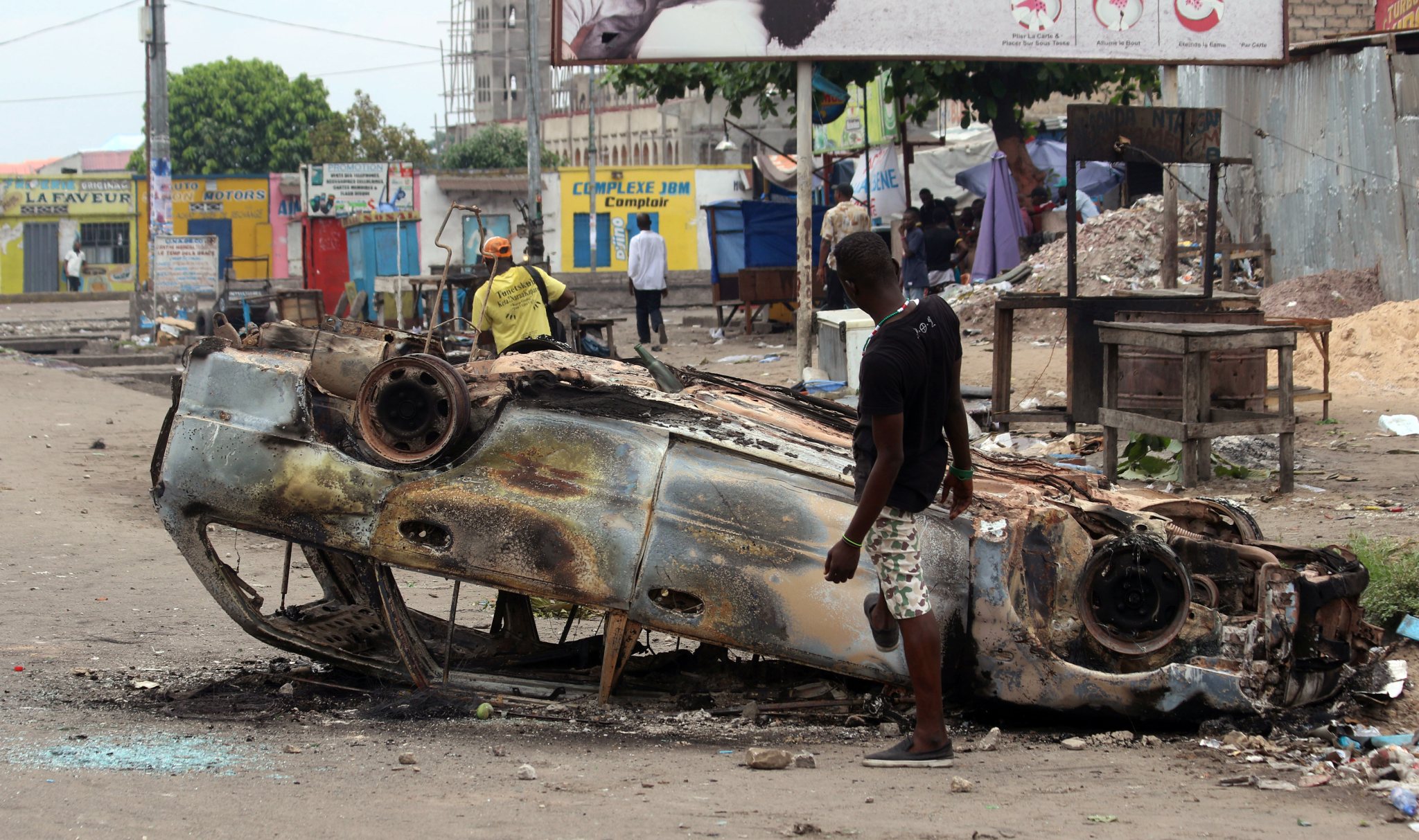
A man stands next to a burnt out car after a protest in Kinshasa, Democratic Republic of Congo, Monday, Sept. 19, 2016. Witnesses say at least four people are dead after opposition protests against a delayed presidential election turned violent in Congo's capital. The protests were organized by activists who are opposed to longtime President Joseph Kabila, who is now expected to stay in office after his mandate ends in December. (AP Photo/John Bompengo)
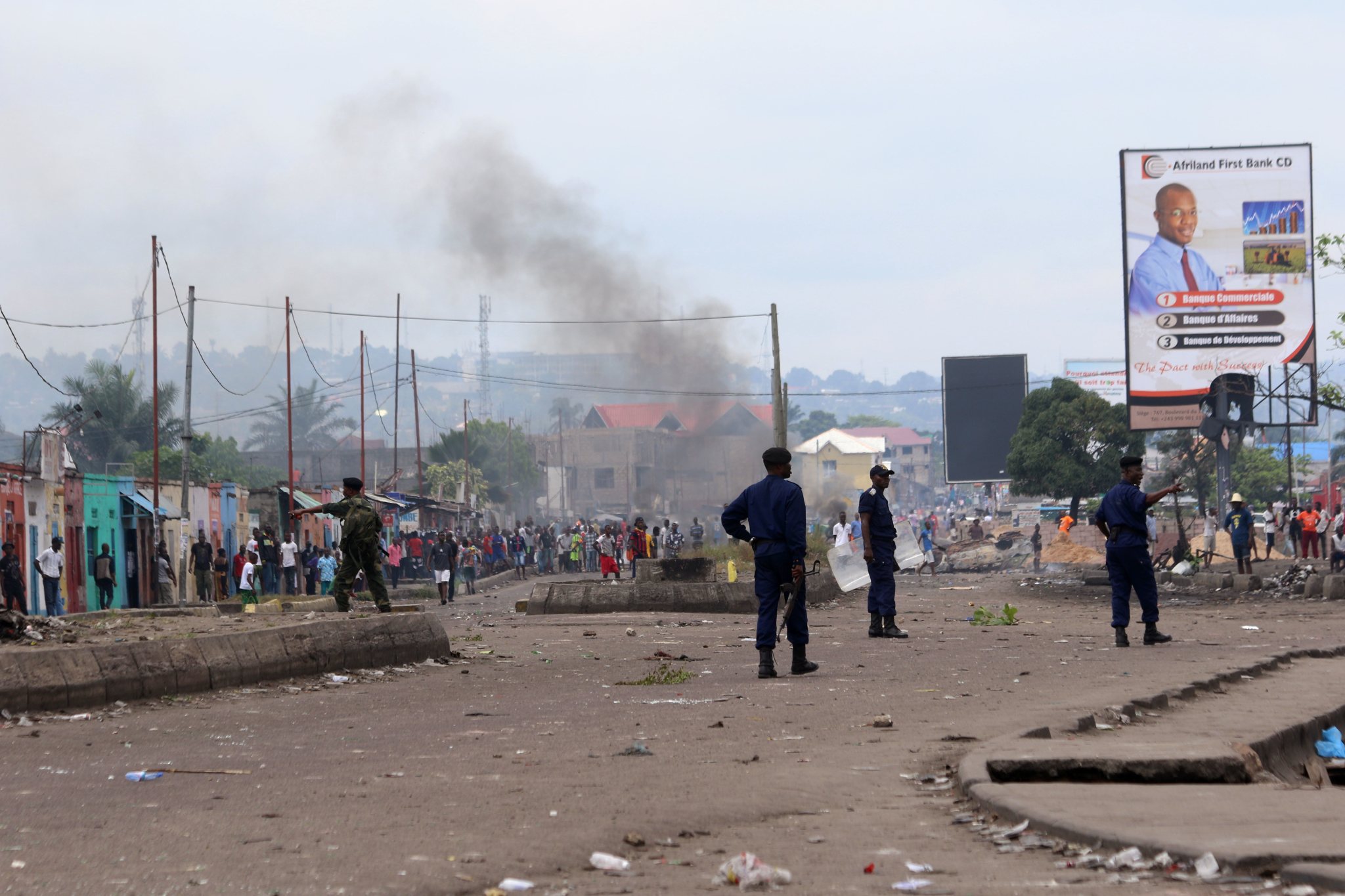
Congolese troops try and control crowds of people during an election protests in Kinshasa, Democratic Republic of Congo, Monday, Sept. 19, 2016. Witnesses say at least four people are dead after opposition protests against a delayed presidential election turned violent in Congo's capital. The protests were organized by activists who are opposed to longtime President Joseph Kabila, who is now expected to stay in office after his mandate ends in December. (AP Photo/John Bompengo)
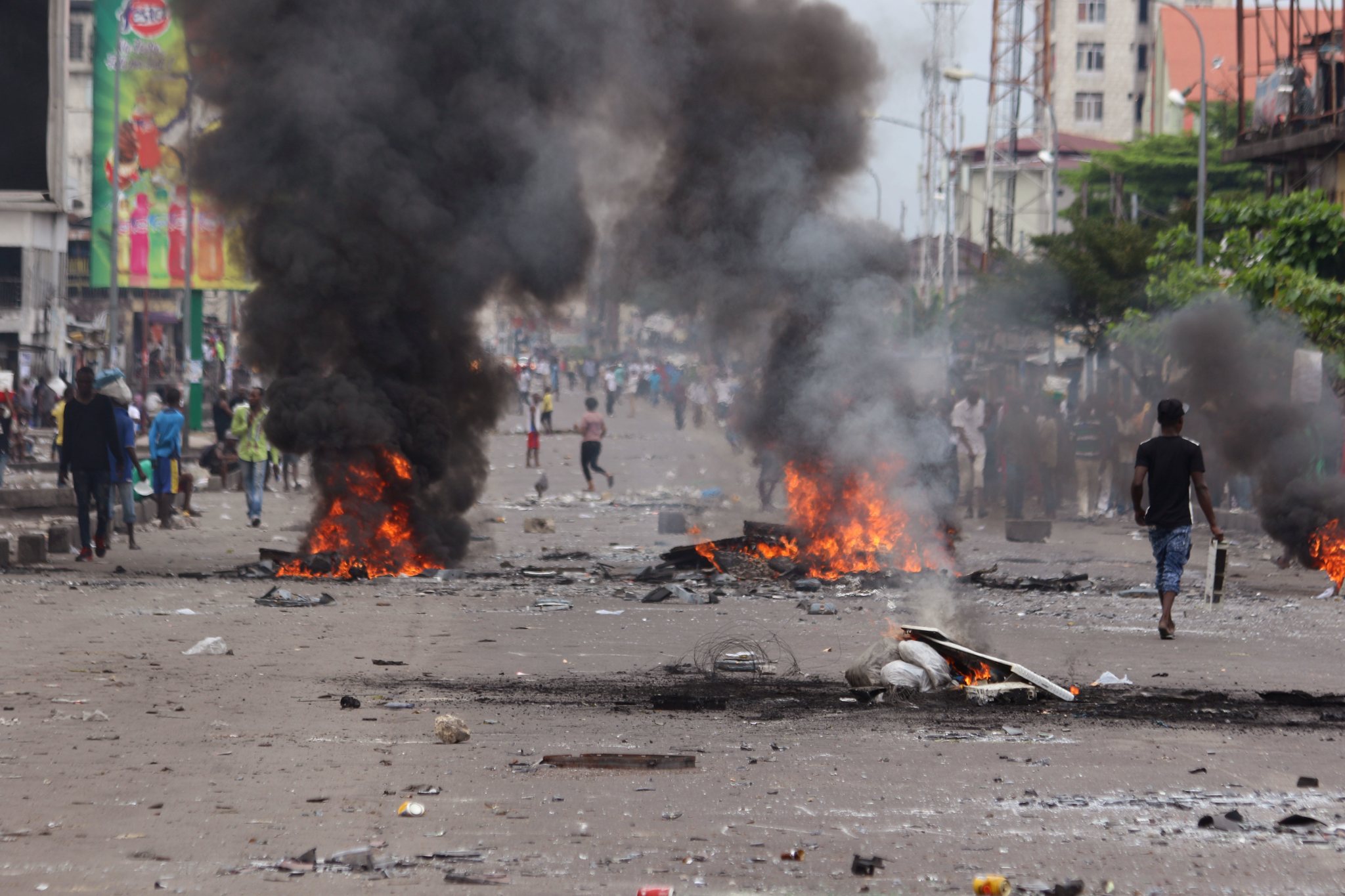
People walk near burning debris during election protests in Kinshasa, Democratic Republic of Congo, Monday, Sept. 19, 2016. Witnesses say at least four people are dead after opposition protests against a delayed presidential election turned violent in Congo's capital. The protests were organized by activists who are opposed to longtime President Joseph Kabila, who is now expected to stay in office after his mandate ends in December. (AP Photo/John Bompengo)
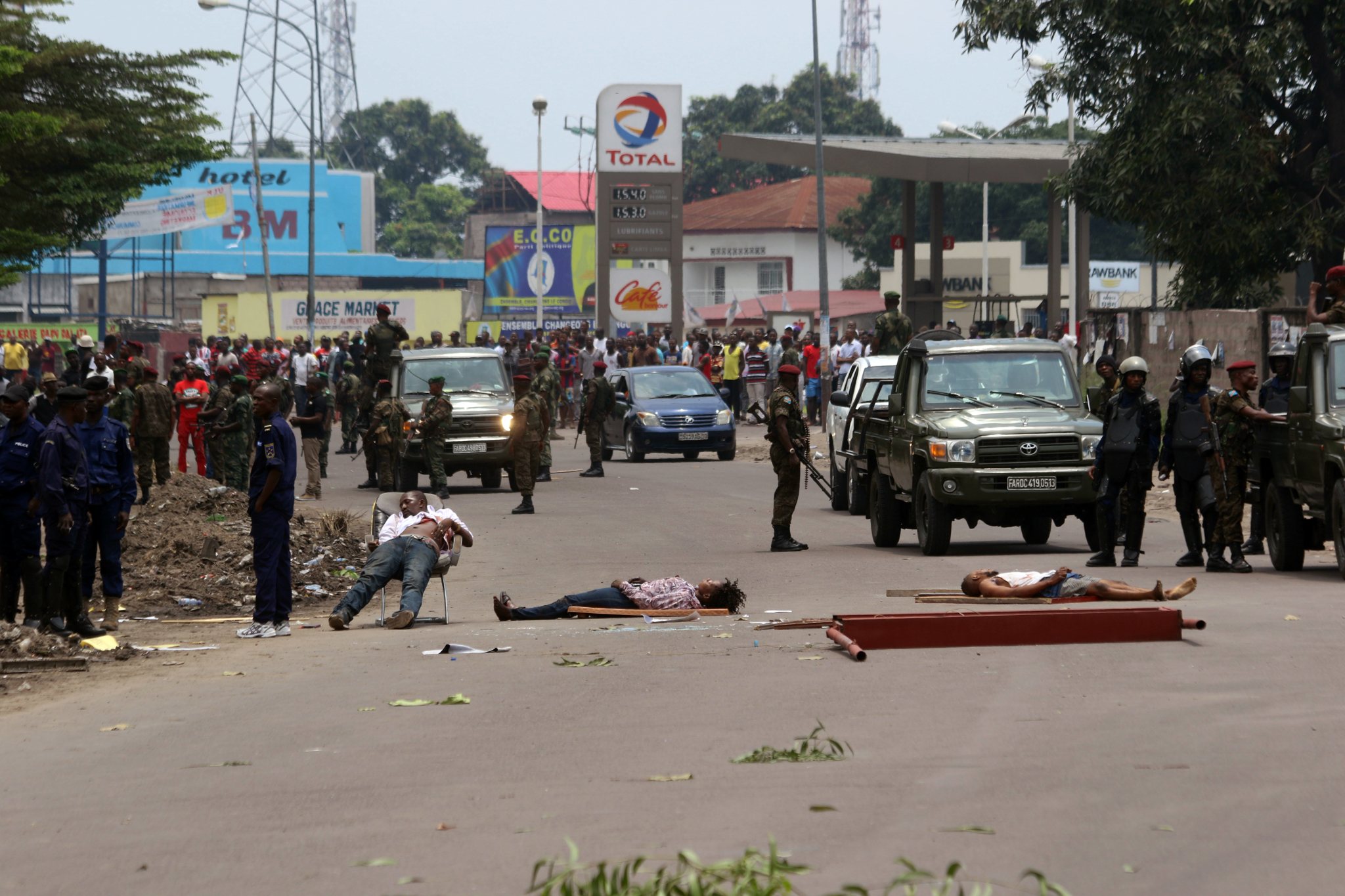
The bodies of people killed during election protests lie in the street, as Congolese troops stand near by in Kinshasa, Democratic Republic of Congo, Monday, Sept. 19, 2016. Witnesses say at least four people are dead after opposition protests against a delayed presidential election turned violent in Congo's capital. The protests were organized by activists who are opposed to longtime President Joseph Kabila, who is now expected to stay in office after his mandate ends in December. (AP Photo/John Bompengo)
KINSHASA, Congo — Street clashes between security forces and demonstrators opposed to President Joseph Kabila left at least 17 dead in Congo’s capital Monday in a dramatic sign of mounting tensions after officials sought to delay the upcoming election until next year.
Some view a delay as a way for Kabila to prolong his rule beyond the end of his mandate in late December, as he is able to stay in power if there is no election to choose a successor.
“Today is a warning. He must leave by December,” protester Salomon Kaba said.
Protesters threw stones and set tires and vehicles ablaze, according to witnesses. Interior Minister Evariste Boshab confirmed that three police officers were among the dead, including one who was burned alive.
An Associated Press photographer saw at least four civilian bodies with gunshot wounds in the streets.
Government spokesman Lambert Mende called the demonstrations a premeditated criminal act.
“This wasn’t a demonstration at all but an attempt to unleash civil war in the city of Kinshasa,” he said. “The authorities decided to put an end to the protest and disperse it.”
Eva Mwakasa, a member of the opposition coalition La Dynamique, said it was difficult to give a death toll as protesters had been dispersed by tear gas.
For months, observers have questioned whether Congo could hold the presidential vote as scheduled on Nov. 27. The country’s electoral commission had indicated that the voter list would not be formalized before July 2017.
Over the weekend, the commission made an official request to the country’s constitutional court for a delay of the vote.
Kabila, who came to power after his father’s assassination in 2001, has yet to announce whether he will pursue another term in office, though the constitution prohibits it.
The violence comes amid growing fears that the delay could lead to prolonged unrest in Congo, a nation as vast in size as Western Europe. The mineral-rich but largely impoverished country suffered back-to-back civil wars until 2003, and previous instability has drawn in armies from neighboring countries.


