




The Lake County Forest Preserve District Board’s powerful land preservation and acquisition committee has been rebranded and its work rolled into another group, in part because of dwindling voter-approved money to buy land.
Also gone as part of President Ann Maine’s postelection appointments is the board’s education cultural resources and public affairs committee. A new operations committee has been created, and eight work sessions, known as committee of the whole meetings, have been added to the calendar.
The moves are meant to match the committee structure with the district’s organizational structure. They also reflect a landscape where money is tight and will give commissioners time to flush out big-picture issues.
Over the years, the district has added to its holdings and has about $4.8 million left for land acquisition from the $185 million approved by voters in 2008.
“I don’t want a committee that has nothing to work on,” Maine said. “It’s not as if we’re looking at having tens of millions of dollars to spend on land projects.”
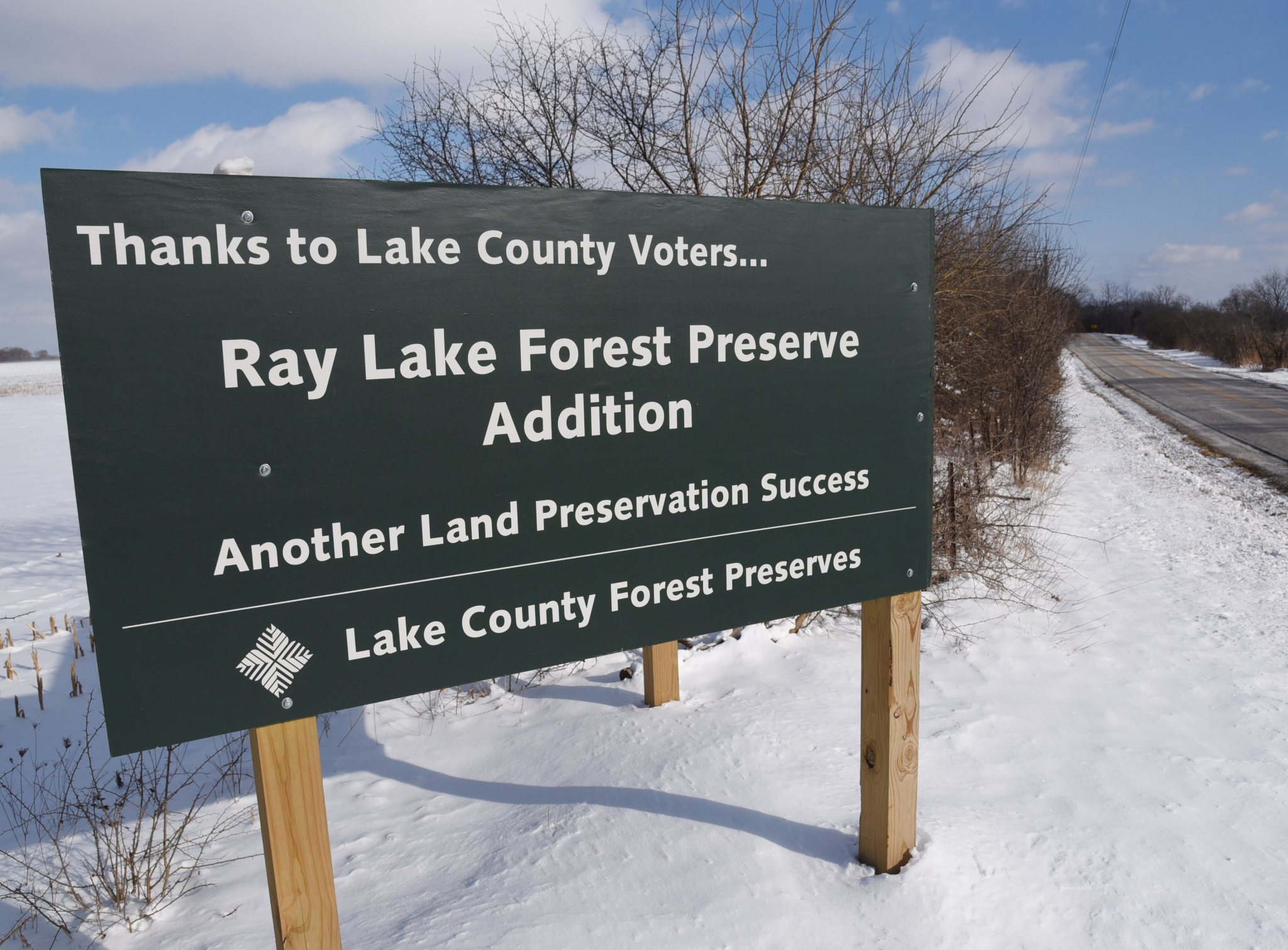
The $10.5 million addition to the Ray Lake Forest Preserve, just over a year ago, was one of the largest in forest preserve history. However, land purchases of that scale are unlikely going forward.
That doesn’t mean acquisitions will cease, and there are several active possibilities in the works. Instead, the land acquisition and the planning and restoration committees, which have met jointly from time to time, have been combined and the name simplified to “planning.”
It also reflects the creation a few years ago of the planning and land preservation department.
The district now has 30,000 acres, and there has been no discussion of replenishing acquisition funds by going back to voters, Maine said. The focus for the next few years will be refining and strengthening strategies to improve what’s there, she added.
“Some people think it (improvement) means parking lots. It’s trails and restoration work — the overall health of the preserves,” Maine said.
Executive Director Ty Kovach, nearing his fourth year at the helm, has pushed an efficiency-based system in which a “100-year vision” is the basis for short- and long-term decisions. The committee of the whole sessions, at which topics such as cell towers in preserves are discussed, will expand that process.
“It’s about efficiency, trying to position ourselves so we have focused time (to spend) on big issues,” Kovach said.

